Where are we going?: Transportation
During the past few decades in Georgia, our transportation dollars were largely spent to make it easier for people to drive cars farther and faster, as well as to build new roads to open up new land for development.
In the past several years, however, the emphasis has begun to shift. Instead of talking about the growth and expansion of infrastructure, instead of talking single-mindedly about highways, I propose we talk about providing greater transportation choices-a diversity of transportation modes.
This shift in priorities is necessary. After all, old road-building habits are tough to break. But there are a number of motivations, including changing state priorities, new budget constraints at the state levels, and a growing understanding of how highway expansion promotes destructive urban sprawl. In addition, more citizens are realizing how automobiles have been allowed to dominate the landscape, degrade our quality of life, pollute the air and waste energy.
It will take strong public support to get this transportation plan moving in a more sustainable direction. Here are some of my transportation goals and ideas for this state:
Transportation goals I favor transportation projects that will:
• Provide greater transportation choices so people do not have to be totally dependent on the automobile (i.e., maximize use of pedestrian, mass transit and bicycle-friendly options).
• Reduce the need for travel by promoting compact, mixed-use development.
• Minimize duplication of infrastructure.
• Preserve open space.
• Minimize public health threats from air pollution.
• Preserve or enhance a sense of neighborhood and community. ·
• Do not substantially contribute to further erosion of the tax base of any existing urbanized community in the region.
Rail alternatives are looking more and more like an economically and environmentally preferred alternative
• Increased use of trains reduces America's dependence on foreign oil.
• Trains are safe.
• Trains contribute to development that is more compact and less wastefull than auto-oriented development.
• Trains pollute less than other modes of transportation
"The public is saying they want changes to our state government's public policy toward transportation spending. People are tired of congestion and they want to use commuter trains as the way out."
Source: www.delamar.us
Wednesday, March 22, 2006


Saturday, March 04, 2006
Common Ground
"People who can agree they share a commitment to the landscape - even if they are otherwise locked in struggle with each other - have at least one deep thing to share."
~ Gary Snyder
~ Gary Snyder
Friday, March 03, 2006
Insani-lanta
If, as Albert Einstein said, insanity is doing the same thing over and over again while expecting different results, then Atlanta qualifies as the craziest region in the country. It keeps expanding highways, convinced that this time it will somehow solve its congestion problems, only to be puzzled when traffic gets even worse. What’s weird is that leaders in Atlanta know that the old ways don’t work, but yet they persist. Why?
Good question. Some believe that the state government in general and the transportation department in particular are so beholden to highway construction interests that they dare not walk away from this losing strategy. (To read an article about this theory, click here.) Another theory: State transportation officials have given up on the future. That is, they’ve spent their careers building increasingly dysfunctional highways, and while that clearly no longer works, they can’t imagine anything working any better. The chair of the DOT board framed this defeatist philosophy when he told an Atlanta Journal-Constitution reporter, “As much as we all would love to see everyone ride a bike or a skateboard or a pony to work, it’s just not going to happen.”
And yet leaders in the Atlanta area know better. Two years ago, a task force of top political and business leaders (including some of the region’s top developers) produced a strikingly clear alternative to the DOT’s defeatism. The answer, the Quality Growth Task Force said, was to intelligently link transportation to land use, so that major transportation corridors become far more densely developed than they are today. Predicted result: Many will live close enough to work to walk, and even those who don’t will be much closer to the transit lines and highways that can take them to work. (To view the task force’s report, click here.)
So given this clear new vision — the answer lies in land use and intelligent transportation, not more dumb highway lanes — what has the region chosen to do? Build more dumb highway lanes. They’ve done this by changing the way the region ranks transportation projects, by considering “congestion relief” ahead of any other factor. Long-suffering transit advocates say this simply translates into more freeways, which will disperse population even farther, which will then create more congestion. Perversely, it actually rewards places that don’t do what the Quality Growth Task Force urged, which is to plan for fewer car trips. “What it will favor are the areas who fail to plan,” one transit advocate told the Journal-Constitution, “The more congested you are, the more money you will get.”
Atlanta’s leaders can’t say they didn’t know what they were doing. A week before the decision, a Georgia Tech planning professor wrote an article for the Journal-Constitution warning that the funding change would lead to disaster. “While building our way out of traffic congestion might sound like a reasonable approach,” Brian Stone wrote, “it is flawed in one important respect: It does not work.” What does work, Stone said, is what the Quality Growth Task Force recommended: Land use that allows people to live close to work, a lot more transit and serious pedestrian infrastructure. He didn’t say this, but a few more skateboard and pony paths would be nice too.
~ Otis White writing in the Feb. issue of GOVERNING
Good question. Some believe that the state government in general and the transportation department in particular are so beholden to highway construction interests that they dare not walk away from this losing strategy. (To read an article about this theory, click here.) Another theory: State transportation officials have given up on the future. That is, they’ve spent their careers building increasingly dysfunctional highways, and while that clearly no longer works, they can’t imagine anything working any better. The chair of the DOT board framed this defeatist philosophy when he told an Atlanta Journal-Constitution reporter, “As much as we all would love to see everyone ride a bike or a skateboard or a pony to work, it’s just not going to happen.”
And yet leaders in the Atlanta area know better. Two years ago, a task force of top political and business leaders (including some of the region’s top developers) produced a strikingly clear alternative to the DOT’s defeatism. The answer, the Quality Growth Task Force said, was to intelligently link transportation to land use, so that major transportation corridors become far more densely developed than they are today. Predicted result: Many will live close enough to work to walk, and even those who don’t will be much closer to the transit lines and highways that can take them to work. (To view the task force’s report, click here.)
So given this clear new vision — the answer lies in land use and intelligent transportation, not more dumb highway lanes — what has the region chosen to do? Build more dumb highway lanes. They’ve done this by changing the way the region ranks transportation projects, by considering “congestion relief” ahead of any other factor. Long-suffering transit advocates say this simply translates into more freeways, which will disperse population even farther, which will then create more congestion. Perversely, it actually rewards places that don’t do what the Quality Growth Task Force urged, which is to plan for fewer car trips. “What it will favor are the areas who fail to plan,” one transit advocate told the Journal-Constitution, “The more congested you are, the more money you will get.”
Atlanta’s leaders can’t say they didn’t know what they were doing. A week before the decision, a Georgia Tech planning professor wrote an article for the Journal-Constitution warning that the funding change would lead to disaster. “While building our way out of traffic congestion might sound like a reasonable approach,” Brian Stone wrote, “it is flawed in one important respect: It does not work.” What does work, Stone said, is what the Quality Growth Task Force recommended: Land use that allows people to live close to work, a lot more transit and serious pedestrian infrastructure. He didn’t say this, but a few more skateboard and pony paths would be nice too.
~ Otis White writing in the Feb. issue of GOVERNING
Thursday, March 02, 2006
Elect Hecht: "the first true transportation visionary to seek statewide office in Georgia"
Former legislator Greg Hecht of Jonesboro is seeking the Democratic nomination for lieutenant governor with a plank supporting commuter rail and other transportation options as a major part of his platform. Hecht has gotten way out front on the issue.
Here's a stone fact: Greg Hecht is the first true transportation visionary to seek statewide office in Georgia. Period.
Certainly, Hecht has good reason to be for the train. The Lovejoy line could provide an economic boost to Clayton County, which has been devastated by wave after wave of bad news: the closings of the Hapeville Ford plant, Fort Gillem and nearby Fort McPherson.
But Hecht says he supports commuter rail anywhere, especially the long-overdue line connecting Atlanta and Athens.
If Lunsford succeeds in killing the Lovejoy line, it could cost the state $87 million in federal funds now earmarked for the project and another $100 million sitting on the back burner.
But Hecht stresses the positives of commuter rail: "It will lessen the commute for citizens, bring jobs and commerce, and clean up the air. I believe commuter rail can provide a better quality of life and better jobs for Georgia."
He points out that metro Atlanta's traffic horror is chasing off companies that otherwise might want to locate in the state. "One of the biggest reasons CEOs do not want to come here is the commute time. The movement of goods through the roads is just too slow. Managers don't want to make the commute."
Hecht is running against the highly regarded former Commissioner of Human Resources Jim Martin of Atlanta in the Democratic primary. But nobody's paid a lick of attention to those two substantive candidates because of the holy war in the Republican primary between state Sen. Casey Cagle and scandal-plagued Ralph Reed.
- Doug Monroe
Here's a stone fact: Greg Hecht is the first true transportation visionary to seek statewide office in Georgia. Period.
Certainly, Hecht has good reason to be for the train. The Lovejoy line could provide an economic boost to Clayton County, which has been devastated by wave after wave of bad news: the closings of the Hapeville Ford plant, Fort Gillem and nearby Fort McPherson.
But Hecht says he supports commuter rail anywhere, especially the long-overdue line connecting Atlanta and Athens.
If Lunsford succeeds in killing the Lovejoy line, it could cost the state $87 million in federal funds now earmarked for the project and another $100 million sitting on the back burner.
But Hecht stresses the positives of commuter rail: "It will lessen the commute for citizens, bring jobs and commerce, and clean up the air. I believe commuter rail can provide a better quality of life and better jobs for Georgia."
He points out that metro Atlanta's traffic horror is chasing off companies that otherwise might want to locate in the state. "One of the biggest reasons CEOs do not want to come here is the commute time. The movement of goods through the roads is just too slow. Managers don't want to make the commute."
Hecht is running against the highly regarded former Commissioner of Human Resources Jim Martin of Atlanta in the Democratic primary. But nobody's paid a lick of attention to those two substantive candidates because of the holy war in the Republican primary between state Sen. Casey Cagle and scandal-plagued Ralph Reed.
- Doug Monroe
Sunday, February 26, 2006
Ride your bike from Roswell to Georgia's Capitol
Bicycling in the State of Georgia needs your help: Have your voice heard! Make a statement and ride your bike from Roswell to Georgia's Capitol. Show the Governor and your state legislators that bicycles matter!! Support upcoming cycling friendly legislation!!!
What:
Ride from Roswell to Georgia's Capitol with Roswell's Mayor Jere Wood and Atlanta's Mayor Shirley Franklin. Once we arrive at the Capitol, enjoy a FREE lunch on us, with Governor Sonny Purdue and your State Legislators.
Where:
Enjoy an easy-paced, relaxing bike ride, which will start at Roswell's City Hall. Ride down Roswell Road and Peachtree Street with a motorcycle escort to Georgia's Capitol! This is a once in a lifetime opportunity! Join along the route!!! We need everyone to participate!!!
When:
Date: Tuesday March 7, 2006 Ride Start Time: 10:00 AM Estimate arrival time at the Capitol: 11:30 AM – noon Departure time from Capitol: 1:00 PM (partial motorcycle escort back too!) Registration: 9:00 – 10:00 AM Rain or shine! We need your support regardless of weather, and regardless of how you get there!
Cost:
FREE!!!!!!
More Details:
There are no official sag stops on this ride. Motorcycle escort will be provided back to Sandy Springs. Bring MARTA fare if you prefer to ride from the Capitol back to Roswell via bus or to Sandy Springs via train.
As always, ride smart, wear a helmet, ride at your own risk, and obey traffic laws.
To reserve a FREE lunch, visit: www.RoswellGov.com
For more details contact Neva at: narem@ci.roswell.ga.us or Jim@SurgeSports.com.
Conceived by Roswell Mayor Jere Woods.
Presented by Bike Roswell and Georgia Bikes! www.BikeRoswell.com and www.GeorgiaBikes.org
What:
Ride from Roswell to Georgia's Capitol with Roswell's Mayor Jere Wood and Atlanta's Mayor Shirley Franklin. Once we arrive at the Capitol, enjoy a FREE lunch on us, with Governor Sonny Purdue and your State Legislators.
Where:
Enjoy an easy-paced, relaxing bike ride, which will start at Roswell's City Hall. Ride down Roswell Road and Peachtree Street with a motorcycle escort to Georgia's Capitol! This is a once in a lifetime opportunity! Join along the route!!! We need everyone to participate!!!
When:
Date: Tuesday March 7, 2006 Ride Start Time: 10:00 AM Estimate arrival time at the Capitol: 11:30 AM – noon Departure time from Capitol: 1:00 PM (partial motorcycle escort back too!) Registration: 9:00 – 10:00 AM Rain or shine! We need your support regardless of weather, and regardless of how you get there!
Cost:
FREE!!!!!!
More Details:
There are no official sag stops on this ride. Motorcycle escort will be provided back to Sandy Springs. Bring MARTA fare if you prefer to ride from the Capitol back to Roswell via bus or to Sandy Springs via train.
As always, ride smart, wear a helmet, ride at your own risk, and obey traffic laws.
To reserve a FREE lunch, visit: www.RoswellGov.com
For more details contact Neva at: narem@ci.roswell.ga.us or Jim@SurgeSports.com.
Conceived by Roswell Mayor Jere Woods.
Presented by Bike Roswell and Georgia Bikes! www.BikeRoswell.com and www.GeorgiaBikes.org

Friday, February 24, 2006
Bankrate.com says Traditional Neighborhood Design growing in popularity
According to a Feb. 23rd Bankrate.com article, "For those who long
for the connectivity of small-town life, yet don't want to give up the
conveniences of urban living, neotraditional communities provide an
alternative. Designed to include everything within easy walking
distance -- from the corner grocery to the school, and perhaps even the
office -- they appeal to die-hard pedestrians. Advocates say the
traditional neighborhood design, or TND, concept, which has been around
since the mid-1980s, is picking up steam. But don't be blinded by the
label. Critics say not everything claiming to be a 'traditional'
neighborhood lives up to its billing...
"TND grew out of the new urbanism movement, a response to suburban
sprawl and a growing dependence on automobiles, says John O. Norquist,
president and CEO of the Congress for the New Urbanism and a former
mayor of Milwaukee. Norquist cites three factors that historically
combined to create the current American landscape of disparate
neighborhoods. One was zoning practices that segregated commercial and
retail districts from residential neighborhoods. Another was the
overbuilding of highways. Finally, the secondary mortgage market, until
recently, favored separately zoned, single-family homes. 'Together,'
says Norquist, 'they created a situation where people and their
activities are spread over the landscape in separate pods. The new
urbanism is all about undoing that.'..."
for the connectivity of small-town life, yet don't want to give up the
conveniences of urban living, neotraditional communities provide an
alternative. Designed to include everything within easy walking
distance -- from the corner grocery to the school, and perhaps even the
office -- they appeal to die-hard pedestrians. Advocates say the
traditional neighborhood design, or TND, concept, which has been around
since the mid-1980s, is picking up steam. But don't be blinded by the
label. Critics say not everything claiming to be a 'traditional'
neighborhood lives up to its billing...
"TND grew out of the new urbanism movement, a response to suburban
sprawl and a growing dependence on automobiles, says John O. Norquist,
president and CEO of the Congress for the New Urbanism and a former
mayor of Milwaukee. Norquist cites three factors that historically
combined to create the current American landscape of disparate
neighborhoods. One was zoning practices that segregated commercial and
retail districts from residential neighborhoods. Another was the
overbuilding of highways. Finally, the secondary mortgage market, until
recently, favored separately zoned, single-family homes. 'Together,'
says Norquist, 'they created a situation where people and their
activities are spread over the landscape in separate pods. The new
urbanism is all about undoing that.'..."
Wednesday, February 22, 2006
Commuter Rail from Athens to Atlanta: "a return to the past"
E.H. Culpepper, one of the region’s key economic development officials, will be here Monday to tout the benefits commuter rail can bring this city.
Culpepper, who has spent 20 years trying to convince area business and political leaders about the potential of the Atlanta-to-Athens commuter railroad, will outline the project in a 5:30 p.m. meeting with the Lilburn City Council. The meeting takes place in City Hall.
Culpepper, along with former Georgia Department of Transportation commissioner Wayne Shackelford, is one of several local business leaders envisioning a railway that links the Centers for Disease Control and Emory University in Atlanta to the thousands of Gwinnett employees who live on the I- 85 and Ga. 316 corridor.
State transportation officials say it’s possible trains could be running along the railway by 2010. Much of key infrastructure for an Atlanta to Athens line already exists.
CSX, the Richmond, Va.-based transportation company that owns the railway, is talking to local officials about its options.
One challenge for Culpepper and other supporters is changing metro Atlanta’s attitudes about alternative transportation. Commuters were once able to catch trains from Athens to Atlanta, but that practice faded away as the automobile took over.
“What we’re really talking about is a return to the past,” Culpepper said.
One possible advantage for cities along the old railroad: reinvigorating commerce. Studies have projected the commuter railway could carry 8,000 passengers a day, create high-paying job centers and spark Atlantic Station-like developments along the 72-mile route.
By Douglas Sams
Source: The Gwinnett Daily Post
Culpepper, who has spent 20 years trying to convince area business and political leaders about the potential of the Atlanta-to-Athens commuter railroad, will outline the project in a 5:30 p.m. meeting with the Lilburn City Council. The meeting takes place in City Hall.
Culpepper, along with former Georgia Department of Transportation commissioner Wayne Shackelford, is one of several local business leaders envisioning a railway that links the Centers for Disease Control and Emory University in Atlanta to the thousands of Gwinnett employees who live on the I- 85 and Ga. 316 corridor.
State transportation officials say it’s possible trains could be running along the railway by 2010. Much of key infrastructure for an Atlanta to Athens line already exists.
CSX, the Richmond, Va.-based transportation company that owns the railway, is talking to local officials about its options.
One challenge for Culpepper and other supporters is changing metro Atlanta’s attitudes about alternative transportation. Commuters were once able to catch trains from Athens to Atlanta, but that practice faded away as the automobile took over.
“What we’re really talking about is a return to the past,” Culpepper said.
One possible advantage for cities along the old railroad: reinvigorating commerce. Studies have projected the commuter railway could carry 8,000 passengers a day, create high-paying job centers and spark Atlantic Station-like developments along the 72-mile route.
By Douglas Sams
Source: The Gwinnett Daily Post
Tuesday, February 21, 2006
Forest Park Council rejects rail referendum
Monday night (Feb. 20), the Forest Park City Council voted down a resolution to support a bill in the state legislature that would give voters a chance to decide if they want to pay for commuter rail.
"It's too early and premature for the city of Forest Park to get involved," said Councilman Wesley Lord as the council voted 3-1 against the resolution.
A bill in the state House would provide for a referendum for voters to decide whether they want to pay for a commuter rail line. That bill is still in committee.
Some people in Clayton County want voters to be able to decide the issue as county leaders have agreed to pay the future estimated $4 million annual operating debt on the proposed Lovejoy-to-Atlanta commuter rail line.
By Add Seymour, Jr.
Source: The Atlanta Journal-Constitution (Clayton/Henry Counties Section) Tuesday, February 21, 2006
"It's too early and premature for the city of Forest Park to get involved," said Councilman Wesley Lord as the council voted 3-1 against the resolution.
A bill in the state House would provide for a referendum for voters to decide whether they want to pay for a commuter rail line. That bill is still in committee.
Some people in Clayton County want voters to be able to decide the issue as county leaders have agreed to pay the future estimated $4 million annual operating debt on the proposed Lovejoy-to-Atlanta commuter rail line.
By Add Seymour, Jr.
Source: The Atlanta Journal-Constitution (Clayton/Henry Counties Section) Tuesday, February 21, 2006
Tuesday, February 14, 2006
"We Must Turn To Transit..."
Fighting congestion on America’s roadways is the goal of a massive new investment in subway, light rail and commuter rail projects, according to U.S. Transportation Secretary Norman Y. Mineta, who today announced a plan to spend $1.5 billion on transit programs in cities like Dallas, Denver, Portland and Salt Lake City.
The spending plan, included in President Bush’s budget submitted to Congress yesterday, provides for multi-year funding for 23 existing projects, and five new projects eligible for funding based on progress in the months ahead.
“As a nation choked with congestion, we must turn to transit as one way to make it easier and faster to get to work, relieve crowded roads, and keep our economy moving,” said Secretary Mineta. “An investment in transit is an investment in fighting congestion.”
The spending plan, included in President Bush’s budget submitted to Congress yesterday, provides for multi-year funding for 23 existing projects, and five new projects eligible for funding based on progress in the months ahead.
“As a nation choked with congestion, we must turn to transit as one way to make it easier and faster to get to work, relieve crowded roads, and keep our economy moving,” said Secretary Mineta. “An investment in transit is an investment in fighting congestion.”
Friday, February 10, 2006
DMU is "Train of the Future"
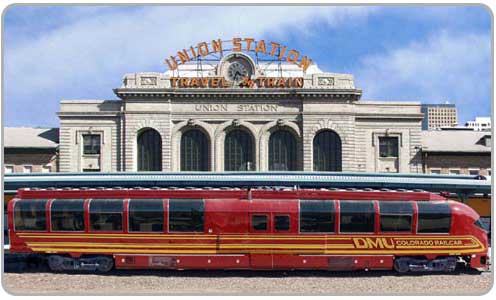
Colorado Railcar has developed a U.S. version of a class of railcar that has been in use for some time in Europe and Japan that could revolutionize transportation in the States. Features of the Colorado Railcar DMU include:
+ World's first double deck hybrid engine/passenger car that seats 188. The new bi-level coach features baggage storage areas, bicycle racks, fully accessible ADA restrooms and roll-on, roll-off wheelchair access.
+ Dramatic fuel economy at half the budget of comparable locomotives.
+ Potential to run biodiesel, resulting in further fuel savings, better air quality, and less oil dependency.
+ 75% less noise than a locomotive.
Read all about it here....
Tuesday, February 07, 2006
Rail is an antidote to our addiction
"I hate to keep harping on this, but Mr. Bush could have announced a major effort to restore the American railroad system. It would have been a major political coup. It would have a huge impact on our oil use. The public would benefit from it tremendously. And it would have put thousands of people to work on something really meaningful. Unlike trips to Mars and experiments in cold fusion, railroads are something we already know how to do, and the tracks are lying out there waiting to be fixed. But the reigning delusions of Hollywood and Las Vegas prevent us from thinking realistically about these things. We're only into wishing for grand slam home runs and five-hundred-million-dollar lottery jackpots. Anything less than that makes us feel like losers."
~ James Kunstler - Addiction, a response to George W. Bush's State of the Union assertion that "America is addicted to oil."
~ James Kunstler - Addiction, a response to George W. Bush's State of the Union assertion that "America is addicted to oil."
Monday, January 30, 2006
A Crown Jewel for the ATL's Emerald Necklace

Two weeks ago, the city of Atlanta and the BeltLine Partnership announced that the city has plans to acquire the active Bellwood Quarry on the west side of Atlanta as an early and major acquisition along the BeltLine. The quarry, in northwest Atlanta would become Atlanta’s newest and largest park. The new Westside Park will add over 300 acres of greenspace to Atlanta and will surround a reservoir, which the City of Atlanta will use as a drinking water reservoir that could hold up to 1.2 billion gallons of water.
The city of Atlanta plans to purchase the leasehold from Vulcan Materials Company and the underlying property from Fulton County. The Vulcan Materials Company lease runs through 2034 and allows the company to quarry the property. The Atlanta City Council approved the city’s purchase of the land and lease on January 17, 2006 by a unanimous vote. Legislation to approve the sale of the land to the city is still under review by the Fulton County Commission.
Source: BeltLine Partnership
Wednesday, January 18, 2006
Bike Tunnel Wins Design Award

According to a Jan. 12th Saskatoon Star-Phoenix article, "Architect
Chris Hardwicke envisions a day when you will walk out your door, jump
on your bicycle and commute to work at 40 kilometres an hour (25 mph)through dedicated tunnels suspended above city streets. He calls his idea
Velo-City, a transportation network of concrete and glass tunnels
through which cyclists could race to and from their destinations. 'It's
about building a separate infrastructure, just like a highway for cars.
I thought, why not a highway for bikes,' Hardwicke says.
"Whether Velo-City is practical remains to be seen, but the idea's
merit has already been recognized. The concept recently ranked third in
a competition about winterizing cities held by Toronto's Design
Exchange, a museum and centre for design research and education...'It
was probably one of the proposals that was the most ambitious and
perhaps the most unrealistic on many levels,' says Paola Poletto, the
Design Exchange's director of research and curator of the show in which
Hardwicke's concept appeared..."
...from CenterLines, the e-newsletter of the National Center for Bicycling & Walking
Bicycle Transportation Systems of Denver, Colorado has been proposing a similar concept for several years...
Tuesday, January 17, 2006
Wooten on Track
"Move the Department of Corrections to Tift College on I-75 at Forsyth, Gov. Sonny Perdue proposes. Yes. Do it. By all means. The Atlanta-to-Macon commuter rail corridor would make sense --- if prisons, state departments and agencies, and related functions are moved south. A critical mass of potential commuters could reduce subsidies the white elephant would require."
~ Jim Wooten, AJC Associate Editorial page editor. His column appears Fridays, Sundays and Tuesdays
~ Jim Wooten, AJC Associate Editorial page editor. His column appears Fridays, Sundays and Tuesdays
Monday, January 02, 2006
Walkable Watkinsville: Forward to the Past
According to a Dec. 28th Banner Herald editorial, "Watkinsville, the
picturesque county seat of Oconee County, is working hard to market
itself as a center of arts tourism, to the point of beginning to bill
itself as the 'Art Land of Georgia.' Perhaps apropos of that,
Watkinsville residents and their city council have themselves been
engaged in something of an 'art' project. With the help of a $15,000
Quality Growth Grant from the state Department of Community Affairs,
the community has for the past several months been exploring the 'art'
of developing a land-use and zoning plan that will help the city retain
and enhance its small-town feel. In a broad sense, the community is
looking to return to the past, when small towns were walkable
communities characterized by mixed-use development that put business,
professional, recreational and residential uses close together...
"Watkinsville's city council and residents have taken a decidedly
different approach, and have spent time developing plans that will
become real guidelines for shaping the city's future. The city is
taking full advantage of the considerable expertise offered through the
Northeast Georgia Regional Development Center, a state agency that
provides technical assistance to governments across Northeast
Georgia...Perhaps one of the best results of the process has been a
commitment to a flexible set of development guidelines. As a result,
the council will be able to work with individual property owners and
developers to 'craft' residential, commercial and other types of
development, rather than just ensuring that development adheres to a
set of inflexible rules..."
Source: CenterLines, the e-newsletter of the National Center for Bicycling & Walking
picturesque county seat of Oconee County, is working hard to market
itself as a center of arts tourism, to the point of beginning to bill
itself as the 'Art Land of Georgia.' Perhaps apropos of that,
Watkinsville residents and their city council have themselves been
engaged in something of an 'art' project. With the help of a $15,000
Quality Growth Grant from the state Department of Community Affairs,
the community has for the past several months been exploring the 'art'
of developing a land-use and zoning plan that will help the city retain
and enhance its small-town feel. In a broad sense, the community is
looking to return to the past, when small towns were walkable
communities characterized by mixed-use development that put business,
professional, recreational and residential uses close together...
"Watkinsville's city council and residents have taken a decidedly
different approach, and have spent time developing plans that will
become real guidelines for shaping the city's future. The city is
taking full advantage of the considerable expertise offered through the
Northeast Georgia Regional Development Center, a state agency that
provides technical assistance to governments across Northeast
Georgia...Perhaps one of the best results of the process has been a
commitment to a flexible set of development guidelines. As a result,
the council will be able to work with individual property owners and
developers to 'craft' residential, commercial and other types of
development, rather than just ensuring that development adheres to a
set of inflexible rules..."
Source: CenterLines, the e-newsletter of the National Center for Bicycling & Walking
Sunday, January 01, 2006
Chamblee Chooses Less Car Congestion and Commuting
Traffic congestion, the bane of metro Atlanta, may actually be having a
positive effect on one DeKalb County city. The daily crush of cars has
led some drivers to consider giving up their vehicles and moving to
more commuter-friendly areas where public transportation, shopping and
living spaces are all within a short walk of one another. That's
exactly how Chamblee wants to be envisioned. This city of about 10,000
residents is positioning itself as a destination for those who want to
live and work without being dependent on their cars. 'We have a golden
opportunity to create a really livable community here,' said Eric
Clarkson, a longtime Chamblee City Council member who takes over as
mayor in January. 'We have this phenomenal location with MARTA plunked
down right in the middle of our city. The people who came before me saw
the chance to develop an exciting district that has all the makings of
a city on the move.'
"The work began a few years ago with a Livable Centers Initiative grant
from the Atlanta Regional Commission. The money provided the spark for
an overhaul of the city's downtown. Construction brought retail spaces
and condominiums along a streetscape of wider sidewalks and more green
space. 'The whole idea was to go back and redesign areas so people can
live without an automobile,' said City Manager Kathy Brannon. 'Instead,
they can use public transportation and walk to shops and restaurants
nearby. People are tired of commuting and, once their children leave
home, they realize there's no need to live way outside the Perimeter.
And young people are probably a lot smarter than we all were: They know
life is too short to spend it sitting in your car.' The concept has
gone over so well that the city is looking to redesign its zoning to
incorporate more livable centers..."
Source: BikeWalk.org
positive effect on one DeKalb County city. The daily crush of cars has
led some drivers to consider giving up their vehicles and moving to
more commuter-friendly areas where public transportation, shopping and
living spaces are all within a short walk of one another. That's
exactly how Chamblee wants to be envisioned. This city of about 10,000
residents is positioning itself as a destination for those who want to
live and work without being dependent on their cars. 'We have a golden
opportunity to create a really livable community here,' said Eric
Clarkson, a longtime Chamblee City Council member who takes over as
mayor in January. 'We have this phenomenal location with MARTA plunked
down right in the middle of our city. The people who came before me saw
the chance to develop an exciting district that has all the makings of
a city on the move.'
"The work began a few years ago with a Livable Centers Initiative grant
from the Atlanta Regional Commission. The money provided the spark for
an overhaul of the city's downtown. Construction brought retail spaces
and condominiums along a streetscape of wider sidewalks and more green
space. 'The whole idea was to go back and redesign areas so people can
live without an automobile,' said City Manager Kathy Brannon. 'Instead,
they can use public transportation and walk to shops and restaurants
nearby. People are tired of commuting and, once their children leave
home, they realize there's no need to live way outside the Perimeter.
And young people are probably a lot smarter than we all were: They know
life is too short to spend it sitting in your car.' The concept has
gone over so well that the city is looking to redesign its zoning to
incorporate more livable centers..."
Source: BikeWalk.org
Tuesday, December 27, 2005
Headed in the wrong direction...

Gas Thief Escapes on Tricycle
Speeding from the scene of the crime, a Chinese boy tows a floating plastic bag of stolen natural gas in early August. Flouting a government ban, farmers around the central Chinese town of Pucheng frequently filch gas from the local oil field.
As Chinese industry booms and automobile use spreads, the country as a whole appears to be on a feverish quest for fossil fuels. Oil consumption rose by 11 percent last year, and the number of private autos hit 14 million in 2003—and is expected to rise to 150 million by 2015.
China National Offshore Oil Corporation dropped its bid for U.S. oil and natural gas company Unocal in August. But the China National Petroleum Corporation, the country's biggest oil company, later bought PetroKazakhstan, a Canadian company with oil fields in the central Asian country of Kazakhstan.
Monday, December 26, 2005
Rail Estate 2006
The Urban Land Institute in conjunction with Pricewaterhouse Coopers has just published its 2006 Emerging Trends in Real Estate for the U.S. market. This annual publication is the gold standard in real estate predictions. It is written primarily for bankers, investors and financiers as well as developers and builders. Three of the seven key trends for the next four years are:
Focus on Infill: sprawl and traffic reach a crisis stage; places without mass transit struggle; transit-oriented development gains momentum to expand light rail and reduce car dependence; boomers and echo boomers will continue to dictate trends toward more infill.
More Suburban Mixed Use: urban town centres will be the rage; big-lot housing becomes a thing of the past; people want to live in places where they can shop, work and play.
Greater Energy Efficiency: an extended period of sticker shock at the pump and jaw-dropping utility bills would change behaviours and demand for both home and commercial owners, reinforcing move-back-in and town centre trends; developers will need to stress more "green" development and rehab as tenants resist higher electricity and heating tabs.
These items are all new to the top seven list.
Focus on Infill: sprawl and traffic reach a crisis stage; places without mass transit struggle; transit-oriented development gains momentum to expand light rail and reduce car dependence; boomers and echo boomers will continue to dictate trends toward more infill.
More Suburban Mixed Use: urban town centres will be the rage; big-lot housing becomes a thing of the past; people want to live in places where they can shop, work and play.
Greater Energy Efficiency: an extended period of sticker shock at the pump and jaw-dropping utility bills would change behaviours and demand for both home and commercial owners, reinforcing move-back-in and town centre trends; developers will need to stress more "green" development and rehab as tenants resist higher electricity and heating tabs.
These items are all new to the top seven list.
Wednesday, December 21, 2005
'Uptown' MARTA Station would be Atlanta's first TJD
Dewberry Capital Corp. has outlined plans for what would be Atlanta's first "transit joint development" -- a new station constructed by the transit authority in collaboration with a developer -- as opposed to traditional "transit-oriented developments" like the BellSouth Corp. campus built near the existing Lindbergh Center station.
The proposed Uptown station would be part of a future Dewberry mixed-use development and cost an estimated $150 million to build, said Dewberry Partner Laura Hodgson.
"This could be a model for new infill MARTA stations," Hodgson said, noting that outgoing MARTA General Manager Nathaniel Ford is on board. MARTA also spent $32,000 studying the original proposal. "We can increase transit ridership by building these new portals."
Source: bizjournals.com
The proposed Uptown station would be part of a future Dewberry mixed-use development and cost an estimated $150 million to build, said Dewberry Partner Laura Hodgson.
"This could be a model for new infill MARTA stations," Hodgson said, noting that outgoing MARTA General Manager Nathaniel Ford is on board. MARTA also spent $32,000 studying the original proposal. "We can increase transit ridership by building these new portals."
Source: bizjournals.com
Subscribe to:
Comments (Atom)