Friday, June 30, 2006

Commuter Rail Bike Coach = Trail + Rail Solution in Massachusetts


According to a June 23rd Massachusetts Bay Transportation Authority
(MBTA) news release, "MBTA General Manager Daniel A. Grabauskas today
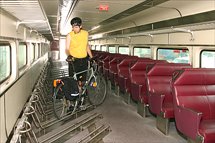
announced the first ever commuter rail coach equipped with 40
stationary bike racks. Renovated to accommodate the many bike
enthusiasts who travel on the Gloucester commuter rail line throughout
the summer, the new coach will debut July 2nd during the 'Ride To The
Races' 47th Annual Fitchburg Longsjo Classic. MBTA General Manager
Grabauskas directed his staff to schedule an extra passenger train
after organizers of the Longsjo Classic approached the MBTA.

"The passenger train includes a new renovated bike coach that
accommodates 42 customers and 40 bicycles. 'The timing is perfect. With
the bike car ready to roll, it only makes sense to debut it for a
cycling event,' said MBTA General Manager Grabauskas. 'By giving people
yet another reason to choose public transportation, we continue our
efforts to attract more customers by making the system easier to use
and a lot more convenient. This is what quality customer service is all
about.'..."

Source: CenterLines, the e-newsletter of the National Center for Bicycling & Walking

Tuesday, May 16, 2006

Pruett's Pipe Dream: Commuter Rail to Canton

Canton mayor has a track record of turning dreams into reality

Beware of "Pruett's Pipe Dreams." They might just come true.

Cecil Pruett, mayor of Canton — the Cherokee county seat — since 1996, came to office with so many ideas that town residents began to refer to them as "Pruett's Pipe Dreams."

He wanted the city to buy and restore an old theater downtown. Done.
He wanted the city to create its own bus transit system offering free rides for everyone. Done.

He wanted Canton's downtown area to have new sidewalks, pedestrian crossings, flower pots, new lighting and street furniture. Done.

He wanted the vacant buildings downtown to be filled with businesses. Done.

Now Pruett wants the city to transform a 130-acre area next to the center of town into a thriving community with residences, quality retail, parks and restored historic buildings.

Five years ago, Canton received one of the Atlanta Regional Commission's Livable Centers Initiative grants to design a plan for that transformation. Since then, Canton has been busy implementing physical public improvements to the area to prepare it for development.

A recently formed advocacy group, the Livable Communities Coalition, has selected Canton as one of its first four projects to help find solutions to turn the plans into reality, according to Jim Durrett, the coalition's executive director. "You've got a real jewel of an opportunity here, and we want to share that story," Durrett told Pruett last week. "You have an opportunity to be a great example for the region."

For Pruett, working with the coalition is another way to turn his dreams into reality. In fact, Pruett has a long history of finding partners and joining forces. Two women instrumental in the renaissance of Canton are Melanie Whitt, Canton's director of economic development since 1996; and Marie Garrett, a planning consultant who has helped the city adopt new zoning ordinances and develop its plans.

While Whitt and Garrett are quick to credit Pruett for providing the vision, they have become a two-woman tag team adept at securing grants and support from various government agencies.

The centerpiece of Pruett's latest pipe dream is the River Mill District, anchored by a 1900 textile mill that closed in 1981. The mill stands next to the railroad tracks, near a large green field that leads to the Etowah River. A restored mill, along with new development, would help Canton open back up to its origins — the river and the railroad.

Plus, it would be a way to extend the efforts that have transformed downtown Canton to include a larger area.

"We want to create parks and recreation along the river and preserve that area," Pruett says. "We want to put together a complete city with jobs, shopping, parks — the things people need and want to make their lives complete."

For him, the 130-acre district enables Canton "to do something very, very special that creates excitement and involvement in a close-knit area."

Still, the project is complicated. The land is owned by various private property owners. The existing mill villages have tiny streets with no room for sidewalks. The topography of Canton is extremely hilly, making development more difficult. And the flat areas near the river are in the flood plain — which can best be used for passive green space rather than for infill development.

But it's not as though Pruett and his gang haven't overcome challenges before. Pruett moved to Canton 40 years ago to work in private business. In his job, he was able to travel the world — Japan, China, Europe and South Africa — to see how cities worked in other countries.

"When my wife talked me into running for mayor, I felt like our city was at a crossroads," Pruett says. "We could become an also-ran, or we could become a city that was very special. We had an opportunity to plan our city before we were inundated with the growth we knew was coming."

In 1990, Canton's population was 4,980; in 2000, it had climbed to 7,780. Whitt says estimates show the city has close to 15,000 residents, and it is projected to have as many as 44,000 residents by 2015. The community also is diverse, with a Latino population of more than 20 percent.

Because its population could triple in 10 years, Canton wants to make sure it grows so that its residents can attain a high quality of life.

That's where the coalition comes in.

The coalition is partnering with Canton to build consensus among property owners, to help remove any obstacles and to help generate development interest in the community.

Meanwhile, Pruett and his team continue to dream. They hope that one day, sooner rather than later, Canton will be connected to the region with a commuter rail stop. In the meantime, its bus service carries riders so they can connect to CCT (Cobb Community Transit), which has routes to several spots, including downtown Atlanta. Canton provides a beacon for our region by demonstrating how leadership and planning help create healthy communities.

So keep on dreaming, Mayor Pruett.

By Maria Saporta

Thursday, May 11, 2006

Rail Visionary keeps on a-rollin'

Dealmaker Emory Morsberger has grand visions for commuter rail and revamping downtown Atlanta

Emory Morsberger, self-described "redeveloper," knows the art of the deal. And the deals he sculpts are reshaping a good bit of Georgia landscape.

You want to ride a train that actually gets you someplace in Georgia? Talk to Morsberger, the indefatigable locomotive behind the planned Athens-to-Atlanta commuter "Brain Train."

You want a face-lift for an Atlanta mega-landmark? Call Morsberger, who asked the obvious question: "How's a white guy from Gwinnett end up with the biggest building in Atlanta?" The building is the 80-year-old, 2-million-square-foot Sears warehouse on Ponce de Leon Boulevard -- Atlanta's City Hall East for the last 15 years.

The simple answer to Morsberger's question is money. He offered $35 million, $15 million more than the nearest competitor. But a better answer is his style. Whatever he does, he couches in terms of a higher calling: making a town a better place to live, or offering road-weary commuters a break from the glacially slow I-85 traffic.

Pardon our skepticism when those words come from a developer's mouth. But Morsberger brings some credibility along with them.

What's not to like about a guy who, when he planned the $400 million Sears building restoration, ensured that new residents will include disabled citizens, who also will get preference in hiring by retailers located in the project?

The one-time Republican state legislator even wins accolades from leading Democrats. "He's a Republican, but I like him," said former Gov. Roy Barnes. "A darn good guy when it comes to vision." Atlanta Mayor Shirley Franklin called him "wonderful."

There's a subtle reason a Democrat would like Morsberger: the hidden power in his pro-transit argument. Morsberger's been pushing the Athens-to-Atlanta commuter line since 2005 as a way not only to un-stuff suburban roads, but to connect Atlanta-area universities with the University of Georgia. That's why he calls it the Brain Train.

He recently released a poll that showed a 71-19 percent Gwinnett County majority in favor of the commuter rail. "A landslide in any language," said pollster Mark Roundtree of Duluth-based Landmark Group. "And Republicans favored the train by 1 percentage point more than Democrats."

That dispels the myth that transit is only for Birkenstock-wearing city folk. Couple that with the poll's findings on gubernatorial contenders, and you have the makings of a political earthquake. In Republican Gwinnett, incumbent Sonny Perdue scored only a 61 percent favorable rating. Democrats Cathy Cox and Mark Taylor were at 49 percent and 30 percent, respectively.

Perdue represents his roots: rural, white Georgia. He's been no friend of Atlanta or, for that matter, even heavily Republican suburban Gwinnett. And he's no fan of transit; it's synonymous with GOP-reviled Atlanta. So, if Perdue doesn't weigh in on behalf of the Athens-Atlanta train, Cox has the opportunity to surf the pro-rail groundswell. She might even overcome Perdue's 12-point lead, capture Gwinnett -- and that could be the tipping point for Georgia. All it would take would be Cox saying, "I vow that in 60 months, that train will be running."

Morsberger didn't want to get political -- although he admitted anger at the GOP-dominated Legislature's 11th-hour insertion into the budget of a resolution that makes it much harder to spend state money on commuter rail. It wrecked the purchase of train cars for a south-metro commuter rail to Lovejoy. And "it will slow down [the Athens-Atlanta project], but won't stop us," he frowned.

To see Morsberger's passion -- for the train or for the Sears building, which he has renamed Ponce Park -- look at what he already has accomplished.

Take Lawrenceville, the Gwinnett County seat. Well, almost no one would have taken the bedraggled town five or six years ago. "I said, 'I want to do something'" about Lawrenceville, where his Morsberger Group is based. "I had a vision about what I wanted to do."

Knowing what happens when a major player starts eyeing big chunks of real estate -- the prices quickly soar -- Morsberger employed stealth. Using 20 or so different corporate names, he started buying up rundown buildings.

"Our president is Rod Britton, and he's African-American," Morsberger said with a big grin. "So we presented him as a gay black hairdresser who wanted to open Sweet Rod's Hair Salon" in order to snare one building.

With boyish mischievousness, he added, "Reporters would call. They'd say they'd heard something. I'd say, 'Oh?' They said they could look it up in the official records. I'd say, 'Oh?' They could look all they wanted. But we were using so many names, well, we never lied, but we did what we set out to do."

After Morsberger acquired about two dozen properties, local owners figured out the plan. Pointing out from his office to the nearby First Baptist Church, Morsberger recalled, "They were all members of the same church, and got together to talk. But by that time, we'd acquired a critical mass. And look at Lawrenceville today." Nice shops, bustling eateries. Not much bad you can say, except for traffic congestion in the town square.

Morsberger, a Maryland native, likes to rattle off dates -- March 14, 2003, for example, when a real estate broker first gave him the idea of acquiring the Sears building. Or, Sept. 5, 1989, when a thief breaking into his car shot Morsberger in the leg and propelled him to successfully run for the Legislature on an anti-crime platform. Or primary Election Day 1992, when Morsberger, a pro-choice Republican, lost to John Linder. "I'm glad I got into politics," Morsberger said. "I'm glad I lost. That got me to where I am today."

Or the day a year ago when he missed a daughter's birthday while sitting on I-85. "We'll improve people's lives if we give them alternatives to cars," he said.

Where will he be tomorrow? Morsberger is eyeing a huge chunk of land south of Atlanta's downtown. "We're going to take the city's skid row and turn it into a nice neighborhood."

By John Sugg
Monday, May 08, 2006

Transit-trailing Atlanta risks being left at the station

As state leaders block every attempt to develop passenger rail in the region, metro Atlanta is losing its competitive edge.

Nearly every other major metro area in the country has jumped on the passenger rail movement --- recognizing how valuable transit and trains are to their economic future.

Yet in Georgia, a few state legislators have successfully done everything they can to kill commuter rail in metro Atlanta. The latest example occurred last month when state legislators inserted "midnight language" in the budget bill to withhold state funds for "any commuter rail passenger facilities unless otherwise especially appropriated."

That language has given board members of the Georgia Department of Transportation an excuse to yet again delay efforts to implement the region's first commuter rail service --- a line would run from Atlanta to Lovejoy and eventually extend to Griffin and Macon.

Gov. Sonny Perdue can veto that language today or tomorrow --- sending a clear signal to transportation leaders that we must move forward with commuter rail. But up to now, Perdue has done little to support commuter trains or transit.

The lack of any progress on rail transit in metro Atlanta has ominous implications. As other metro areas move forward to provide transportation options for their residents, we continue to be stuck in traffic jams.

Otis White, president of Atlanta-based Civic Strategies, tracks urban trends in the top 20 cities in the country. His research shows that 17 of those cities are committed to rail transit.

The three that aren't are Detroit, where regional leaders feel it's too late for the Michigan city; Tampa, where leaders question whether the city is big enough to support rail; and Atlanta.

"Atlanta is truly the odd metro out," White says. "These other metropolitan areas are going as hard and as fast as they can to build rail transit, and we're not."
Once metro Atlanta had a two-decade lead over these other cities when it built its MARTA system. But sadly, transit growth was stopped in its tracks.

"We were 10 to 15 years ahead of Dallas, and now they are far ahead of us in transit," White says. "Today, they have got the model big city transit system in the country."

Dallas is not alone. From Chicago to Denver, from Washington to Seattle and from Miami to Minneapolis, urban areas are building rail transit.

A striking example is Houston, once viewed as one of the most auto-oriented, sprawling metro areas in the country.

"Houston, the oil capital of the country is building rail transit as fast and as furious as it can, and voters are supporting it overwhelmingly," White says. "If Houston can do it, Atlanta can do it."

And it's not just the major cities. Second-tier cities --- emerging competitors to metro Atlanta --- are investing in rail transit. Charlotte, Portland, Las Vegas and Salt Lake City are only a few examples of cities that view rail as a sound investment.

"Nationally, we turned the corner on the discussion of rail transit 10 years ago because the highway-only system broke down," White says. "I just don't know of another major metro area that's carrying on this silly discussion other than Atlanta."

And most metro areas are not hung up on the need for public subsidies for transit, understanding that all modes of transportation are subsidized.

In fact, in Virginia, the state has agreed to turn over toll road revenues to build a Metrorail line to serve the Dulles International Airport. The airport actually will take over control of the Dulles Toll Road and use those revenues to finance bonds for the $4 billion, 23-mile rail line.

Cities also are adopting a rail strategy because of its positive economic impact on communities --- particularly when compared to massive road projects. "Transit builds cities, and highways do egregious harm to the areas they go through," White says, adding that transit encourages development.

Although metro Atlanta is now lagging behind other cities, White is optimistic the region will reverse its slide and move toward a sensible transit system. "Ultimately, it will be the development community and the business community that will lead us to be smarter about mobility," White says, adding that developers understand the economic benefits of transit.

Case in point, developers from Athens to Gwinnett County to downtown Atlanta are pushing for a "Brain Train" that would connect major universities while sparking billions of dollars of economic development along the corridor.

And historic towns left behind by the Interstate system see commuter rail as a way to revive their communities. For example, an Atlanta-Macon line would provide an economic boost to all the station stops along the way.

"You would make it possible for people to live in Macon and commute to Atlanta," White says. "That would help revitalize Macon."

Perdue has a tremendous opportunity to propel our region with rail. With a stroke of the pen, he can send the message that Georgia will be proactive in offering transportation options.

But if state leaders keep killing efforts to develop rail transit, metro Atlanta will continue to (trail) behind other major cities --- to our own economic peril.

Maria Saporta - Staff
Monday, May 8, 2006
msaporta@ajc.com
Source: ajc.com

Tuesday, April 25, 2006

The Great Train Robbery

Jonesboro, GA - Apr 25, 2006 Last week, it came to light that a legislator put language into the State's budget that may prohibit Georgia of our first commuter rail: a train line from Atlanta to Lovejoy, GA, a very exciting change for traffic-weary Georgians. Join Sierra Club, Citizens for Progressive Transit, and others for a press conference this Thursday:

Thursday, April 27, 2006
11:45 am - 12:45 pm
Georgia State Capitol
Washington Street Side

All supporters of more trains in Georgia are needed!
Join us in calling on the Governor to veto the Georgia Train Robbery clause in the budget - a deal done behind closed doors and to show public support for Georgia's first commuter rail line. We have the state funds. We have the federal funds. Let's get the train on the tracks! E-mail patty.durand@sierraclub.org or (404) 607-1262, ext 226 with questions.

Clayton County Chamber of Commerce
Shane Short
President and CEO
email: sshort@claytonchamber.org
phone: 678-610-4021

Thursday, April 13, 2006

Fortune Predicts Atlanta's Bubble Won't Burst

Home to several major corporations and the country's busiest airport, Atlanta also is the second-largest housing market in the nation. Housing prices have enjoyed steady appreciation without the skyrocketing increases that have pushed other large markets toward a bubble. Commuters who have tired of long commutes have sparked resurgence in in-town development close to transit; the mixed-use development Atlantic Station has gained national attention as a true urban village with easy accessibility to jobs and cultural activities in downtown. Fortune predicts about 4% growth in values for the next two years.

Source: msn.com real estate

Wednesday, March 22, 2006

Senate Candidate Silvia Delamar: Pro Trail + Rail Platform

Where are we going?: Transportation
During the past few decades in Georgia, our transportation dollars were largely spent to make it easier for people to drive cars farther and faster, as well as to build new roads to open up new land for development.

In the past several years, however, the emphasis has begun to shift. Instead of talking about the growth and expansion of infrastructure, instead of talking single-mindedly about highways, I propose we talk about providing greater transportation choices-a diversity of transportation modes.

This shift in priorities is necessary. After all, old road-building habits are tough to break. But there are a number of motivations, including changing state priorities, new budget constraints at the state levels, and a growing understanding of how highway expansion promotes destructive urban sprawl. In addition, more citizens are realizing how automobiles have been allowed to dominate the landscape, degrade our quality of life, pollute the air and waste energy.

It will take strong public support to get this transportation plan moving in a more sustainable direction. Here are some of my transportation goals and ideas for this state:

Transportation goals I favor transportation projects that will:
• Provide greater transportation choices so people do not have to be totally dependent on the automobile (i.e., maximize use of pedestrian, mass transit and bicycle-friendly options).
• Reduce the need for travel by promoting compact, mixed-use development.
• Minimize duplication of infrastructure.
• Preserve open space.
• Minimize public health threats from air pollution.
• Preserve or enhance a sense of neighborhood and community. ·
• Do not substantially contribute to further erosion of the tax base of any existing urbanized community in the region.

Rail alternatives are looking more and more like an economically and environmentally preferred alternative

• Increased use of trains reduces America's dependence on foreign oil.
• Trains are safe.
• Trains contribute to development that is more compact and less wastefull than auto-oriented development.
• Trains pollute less than other modes of transportation

"The public is saying they want changes to our state government's public policy toward transportation spending. People are tired of congestion and they want to use commuter trains as the way out."

Source: www.delamar.us

Saturday, March 04, 2006

Common Ground

"People who can agree they share a commitment to the landscape - even if they are otherwise locked in struggle with each other - have at least one deep thing to share."

~ Gary Snyder

Friday, March 03, 2006

Insani-lanta

If, as Albert Einstein said, insanity is doing the same thing over and over again while expecting different results, then Atlanta qualifies as the craziest region in the country. It keeps expanding highways, convinced that this time it will somehow solve its congestion problems, only to be puzzled when traffic gets even worse. What’s weird is that leaders in Atlanta know that the old ways don’t work, but yet they persist. Why?

Good question. Some believe that the state government in general and the transportation department in particular are so beholden to highway construction interests that they dare not walk away from this losing strategy. (To read an article about this theory, click here.) Another theory: State transportation officials have given up on the future. That is, they’ve spent their careers building increasingly dysfunctional highways, and while that clearly no longer works, they can’t imagine anything working any better. The chair of the DOT board framed this defeatist philosophy when he told an Atlanta Journal-Constitution reporter, “As much as we all would love to see everyone ride a bike or a skateboard or a pony to work, it’s just not going to happen.”

And yet leaders in the Atlanta area know better. Two years ago, a task force of top political and business leaders (including some of the region’s top developers) produced a strikingly clear alternative to the DOT’s defeatism. The answer, the Quality Growth Task Force said, was to intelligently link transportation to land use, so that major transportation corridors become far more densely developed than they are today. Predicted result: Many will live close enough to work to walk, and even those who don’t will be much closer to the transit lines and highways that can take them to work. (To view the task force’s report, click here.)

So given this clear new vision — the answer lies in land use and intelligent transportation, not more dumb highway lanes — what has the region chosen to do? Build more dumb highway lanes. They’ve done this by changing the way the region ranks transportation projects, by considering “congestion relief” ahead of any other factor. Long-suffering transit advocates say this simply translates into more freeways, which will disperse population even farther, which will then create more congestion. Perversely, it actually rewards places that don’t do what the Quality Growth Task Force urged, which is to plan for fewer car trips. “What it will favor are the areas who fail to plan,” one transit advocate told the Journal-Constitution, “The more congested you are, the more money you will get.”

Atlanta’s leaders can’t say they didn’t know what they were doing. A week before the decision, a Georgia Tech planning professor wrote an article for the Journal-Constitution warning that the funding change would lead to disaster. “While building our way out of traffic congestion might sound like a reasonable approach,” Brian Stone wrote, “it is flawed in one important respect: It does not work.” What does work, Stone said, is what the Quality Growth Task Force recommended: Land use that allows people to live close to work, a lot more transit and serious pedestrian infrastructure. He didn’t say this, but a few more skateboard and pony paths would be nice too.

~ Otis White writing in the Feb. issue of GOVERNING

Thursday, March 02, 2006

Elect Hecht: "the first true transportation visionary to seek statewide office in Georgia"

Former legislator Greg Hecht of Jonesboro is seeking the Democratic nomination for lieutenant governor with a plank supporting commuter rail and other transportation options as a major part of his platform. Hecht has gotten way out front on the issue.

Here's a stone fact: Greg Hecht is the first true transportation visionary to seek statewide office in Georgia. Period.

Certainly, Hecht has good reason to be for the train. The Lovejoy line could provide an economic boost to Clayton County, which has been devastated by wave after wave of bad news: the closings of the Hapeville Ford plant, Fort Gillem and nearby Fort McPherson.

But Hecht says he supports commuter rail anywhere, especially the long-overdue line connecting Atlanta and Athens.

If Lunsford succeeds in killing the Lovejoy line, it could cost the state $87 million in federal funds now earmarked for the project and another $100 million sitting on the back burner.

But Hecht stresses the positives of commuter rail: "It will lessen the commute for citizens, bring jobs and commerce, and clean up the air. I believe commuter rail can provide a better quality of life and better jobs for Georgia."

He points out that metro Atlanta's traffic horror is chasing off companies that otherwise might want to locate in the state. "One of the biggest reasons CEOs do not want to come here is the commute time. The movement of goods through the roads is just too slow. Managers don't want to make the commute."

Hecht is running against the highly regarded former Commissioner of Human Resources Jim Martin of Atlanta in the Democratic primary. But nobody's paid a lick of attention to those two substantive candidates because of the holy war in the Republican primary between state Sen. Casey Cagle and scandal-plagued Ralph Reed.

- Doug Monroe

Sunday, February 26, 2006

Ride your bike from Roswell to Georgia's Capitol

Bicycling in the State of Georgia needs your help: Have your voice heard! Make a statement and ride your bike from Roswell to Georgia's Capitol. Show the Governor and your state legislators that bicycles matter!! Support upcoming cycling friendly legislation!!!

What:
Ride from Roswell to Georgia's Capitol with Roswell's Mayor Jere Wood and Atlanta's Mayor Shirley Franklin. Once we arrive at the Capitol, enjoy a FREE lunch on us, with Governor Sonny Purdue and your State Legislators.

Where:
Enjoy an easy-paced, relaxing bike ride, which will start at Roswell's City Hall. Ride down Roswell Road and Peachtree Street with a motorcycle escort to Georgia's Capitol! This is a once in a lifetime opportunity! Join along the route!!! We need everyone to participate!!!

When:
Date: Tuesday March 7, 2006 Ride Start Time: 10:00 AM Estimate arrival time at the Capitol: 11:30 AM – noon Departure time from Capitol: 1:00 PM (partial motorcycle escort back too!) Registration: 9:00 – 10:00 AM Rain or shine! We need your support regardless of weather, and regardless of how you get there!

Cost:
FREE!!!!!!

More Details:
There are no official sag stops on this ride. Motorcycle escort will be provided back to Sandy Springs. Bring MARTA fare if you prefer to ride from the Capitol back to Roswell via bus or to Sandy Springs via train.

As always, ride smart, wear a helmet, ride at your own risk, and obey traffic laws.

To reserve a FREE lunch, visit: www.RoswellGov.com

For more details contact Neva at: narem@ci.roswell.ga.us or Jim@SurgeSports.com.

Conceived by Roswell Mayor Jere Woods.
Presented by Bike Roswell and Georgia Bikes! www.BikeRoswell.com and www.GeorgiaBikes.org

Share the Space


6 bikes to one car...

Friday, February 24, 2006

Bankrate.com says Traditional Neighborhood Design growing in popularity

According to a Feb. 23rd Bankrate.com article, "For those who long
for the connectivity of small-town life, yet don't want to give up the
conveniences of urban living, neotraditional communities provide an
alternative. Designed to include everything within easy walking
distance -- from the corner grocery to the school, and perhaps even the
office -- they appeal to die-hard pedestrians. Advocates say the
traditional neighborhood design, or TND, concept, which has been around
since the mid-1980s, is picking up steam. But don't be blinded by the
label. Critics say not everything claiming to be a 'traditional'
neighborhood lives up to its billing...

"TND grew out of the new urbanism movement, a response to suburban
sprawl and a growing dependence on automobiles, says John O. Norquist,
president and CEO of the Congress for the New Urbanism and a former
mayor of Milwaukee. Norquist cites three factors that historically
combined to create the current American landscape of disparate
neighborhoods. One was zoning practices that segregated commercial and
retail districts from residential neighborhoods. Another was the
overbuilding of highways. Finally, the secondary mortgage market, until
recently, favored separately zoned, single-family homes. 'Together,'
says Norquist, 'they created a situation where people and their
activities are spread over the landscape in separate pods. The new
urbanism is all about undoing that.'..."

Wednesday, February 22, 2006

Commuter Rail from Athens to Atlanta: "a return to the past"

E.H. Culpepper, one of the region’s key economic development officials, will be here Monday to tout the benefits commuter rail can bring this city.

Culpepper, who has spent 20 years trying to convince area business and political leaders about the potential of the Atlanta-to-Athens commuter railroad, will outline the project in a 5:30 p.m. meeting with the Lilburn City Council. The meeting takes place in City Hall.

Culpepper, along with former Georgia Department of Transportation commissioner Wayne Shackelford, is one of several local business leaders envisioning a railway that links the Centers for Disease Control and Emory University in Atlanta to the thousands of Gwinnett employees who live on the I- 85 and Ga. 316 corridor.

State transportation officials say it’s possible trains could be running along the railway by 2010. Much of key infrastructure for an Atlanta to Athens line already exists.

CSX, the Richmond, Va.-based transportation company that owns the railway, is talking to local officials about its options.

One challenge for Culpepper and other supporters is changing metro Atlanta’s attitudes about alternative transportation. Commuters were once able to catch trains from Athens to Atlanta, but that practice faded away as the automobile took over.

“What we’re really talking about is a return to the past,” Culpepper said.

One possible advantage for cities along the old railroad: reinvigorating commerce. Studies have projected the commuter railway could carry 8,000 passengers a day, create high-paying job centers and spark Atlantic Station-like developments along the 72-mile route.

By Douglas Sams
Source: The Gwinnett Daily Post

Tuesday, February 21, 2006

Forest Park Council rejects rail referendum

Monday night (Feb. 20), the Forest Park City Council voted down a resolution to support a bill in the state legislature that would give voters a chance to decide if they want to pay for commuter rail.

"It's too early and premature for the city of Forest Park to get involved," said Councilman Wesley Lord as the council voted 3-1 against the resolution.

A bill in the state House would provide for a referendum for voters to decide whether they want to pay for a commuter rail line. That bill is still in committee.

Some people in Clayton County want voters to be able to decide the issue as county leaders have agreed to pay the future estimated $4 million annual operating debt on the proposed Lovejoy-to-Atlanta commuter rail line.

By Add Seymour, Jr.
Source: The Atlanta Journal-Constitution (Clayton/Henry Counties Section) Tuesday, February 21, 2006

Tuesday, February 14, 2006

"We Must Turn To Transit..."

Fighting congestion on America’s roadways is the goal of a massive new investment in subway, light rail and commuter rail projects, according to U.S. Transportation Secretary Norman Y. Mineta, who today announced a plan to spend $1.5 billion on transit programs in cities like Dallas, Denver, Portland and Salt Lake City.

The spending plan, included in President Bush’s budget submitted to Congress yesterday, provides for multi-year funding for 23 existing projects, and five new projects eligible for funding based on progress in the months ahead.

“As a nation choked with congestion, we must turn to transit as one way to make it easier and faster to get to work, relieve crowded roads, and keep our economy moving,” said Secretary Mineta. “An investment in transit is an investment in fighting congestion.”

Friday, February 10, 2006

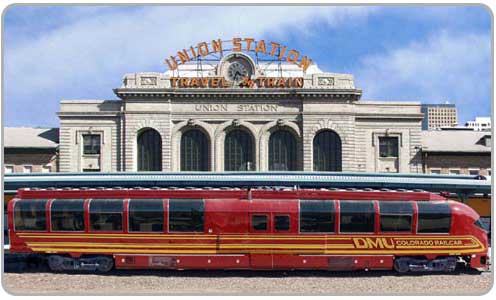
DMU is "Train of the Future"


Colorado Railcar has developed a U.S. version of a class of railcar that has been in use for some time in Europe and Japan that could revolutionize transportation in the States. Features of the Colorado Railcar DMU include:

+ World's first double deck hybrid engine/passenger car that seats 188. The new bi-level coach features baggage storage areas, bicycle racks, fully accessible ADA restrooms and roll-on, roll-off wheelchair access.

+ Dramatic fuel economy at half the budget of comparable locomotives.

+ Potential to run biodiesel, resulting in further fuel savings, better air quality, and less oil dependency.

+ 75% less noise than a locomotive.

Read all about it here....

Tuesday, February 07, 2006

Rail is an antidote to our addiction

"I hate to keep harping on this, but Mr. Bush could have announced a major effort to restore the American railroad system. It would have been a major political coup. It would have a huge impact on our oil use. The public would benefit from it tremendously. And it would have put thousands of people to work on something really meaningful. Unlike trips to Mars and experiments in cold fusion, railroads are something we already know how to do, and the tracks are lying out there waiting to be fixed. But the reigning delusions of Hollywood and Las Vegas prevent us from thinking realistically about these things. We're only into wishing for grand slam home runs and five-hundred-million-dollar lottery jackpots. Anything less than that makes us feel like losers."

~ James Kunstler - Addiction, a response to George W. Bush's State of the Union assertion that "America is addicted to oil."

Monday, January 30, 2006

A Crown Jewel for the ATL's Emerald Necklace


Two weeks ago, the city of Atlanta and the BeltLine Partnership announced that the city has plans to acquire the active Bellwood Quarry on the west side of Atlanta as an early and major acquisition along the BeltLine. The quarry, in northwest Atlanta would become Atlanta’s newest and largest park. The new Westside Park will add over 300 acres of greenspace to Atlanta and will surround a reservoir, which the City of Atlanta will use as a drinking water reservoir that could hold up to 1.2 billion gallons of water.

The city of Atlanta plans to purchase the leasehold from Vulcan Materials Company and the underlying property from Fulton County. The Vulcan Materials Company lease runs through 2034 and allows the company to quarry the property. The Atlanta City Council approved the city’s purchase of the land and lease on January 17, 2006 by a unanimous vote. Legislation to approve the sale of the land to the city is still under review by the Fulton County Commission.

Source: BeltLine Partnership

Wednesday, January 18, 2006

Bike Tunnel Wins Design Award


According to a Jan. 12th Saskatoon Star-Phoenix article, "Architect
Chris Hardwicke envisions a day when you will walk out your door, jump
on your bicycle and commute to work at 40 kilometres an hour (25 mph)through dedicated tunnels suspended above city streets. He calls his idea
Velo-City, a transportation network of concrete and glass tunnels
through which cyclists could race to and from their destinations. 'It's
about building a separate infrastructure, just like a highway for cars.
I thought, why not a highway for bikes,' Hardwicke says.

"Whether Velo-City is practical remains to be seen, but the idea's
merit has already been recognized. The concept recently ranked third in
a competition about winterizing cities held by Toronto's Design
Exchange, a museum and centre for design research and education...'It
was probably one of the proposals that was the most ambitious and
perhaps the most unrealistic on many levels,' says Paola Poletto, the
Design Exchange's director of research and curator of the show in which
Hardwicke's concept appeared..."

...from CenterLines, the e-newsletter of the National Center for Bicycling & Walking

Bicycle Transportation Systems of Denver, Colorado has been proposing a similar concept for several years...