Tuesday, December 27, 2005

Headed in the wrong direction...


Gas Thief Escapes on Tricycle

Speeding from the scene of the crime, a Chinese boy tows a floating plastic bag of stolen natural gas in early August. Flouting a government ban, farmers around the central Chinese town of Pucheng frequently filch gas from the local oil field.

As Chinese industry booms and automobile use spreads, the country as a whole appears to be on a feverish quest for fossil fuels. Oil consumption rose by 11 percent last year, and the number of private autos hit 14 million in 2003—and is expected to rise to 150 million by 2015.

China National Offshore Oil Corporation dropped its bid for U.S. oil and natural gas company Unocal in August. But the China National Petroleum Corporation, the country's biggest oil company, later bought PetroKazakhstan, a Canadian company with oil fields in the central Asian country of Kazakhstan.

Monday, December 26, 2005

Rail Estate 2006

The Urban Land Institute in conjunction with Pricewaterhouse Coopers has just published its 2006 Emerging Trends in Real Estate for the U.S. market. This annual publication is the gold standard in real estate predictions. It is written primarily for bankers, investors and financiers as well as developers and builders. Three of the seven key trends for the next four years are:

Focus on Infill: sprawl and traffic reach a crisis stage; places without mass transit struggle; transit-oriented development gains momentum to expand light rail and reduce car dependence; boomers and echo boomers will continue to dictate trends toward more infill.

More Suburban Mixed Use: urban town centres will be the rage; big-lot housing becomes a thing of the past; people want to live in places where they can shop, work and play.

Greater Energy Efficiency: an extended period of sticker shock at the pump and jaw-dropping utility bills would change behaviours and demand for both home and commercial owners, reinforcing move-back-in and town centre trends; developers will need to stress more "green" development and rehab as tenants resist higher electricity and heating tabs.

These items are all new to the top seven list.

Wednesday, December 21, 2005

'Uptown' MARTA Station would be Atlanta's first TJD

Dewberry Capital Corp. has outlined plans for what would be Atlanta's first "transit joint development" -- a new station constructed by the transit authority in collaboration with a developer -- as opposed to traditional "transit-oriented developments" like the BellSouth Corp. campus built near the existing Lindbergh Center station.

The proposed Uptown station would be part of a future Dewberry mixed-use development and cost an estimated $150 million to build, said Dewberry Partner Laura Hodgson.

"This could be a model for new infill MARTA stations," Hodgson said, noting that outgoing MARTA General Manager Nathaniel Ford is on board. MARTA also spent $32,000 studying the original proposal. "We can increase transit ridership by building these new portals."

Source: bizjournals.com

Tuesday, December 13, 2005

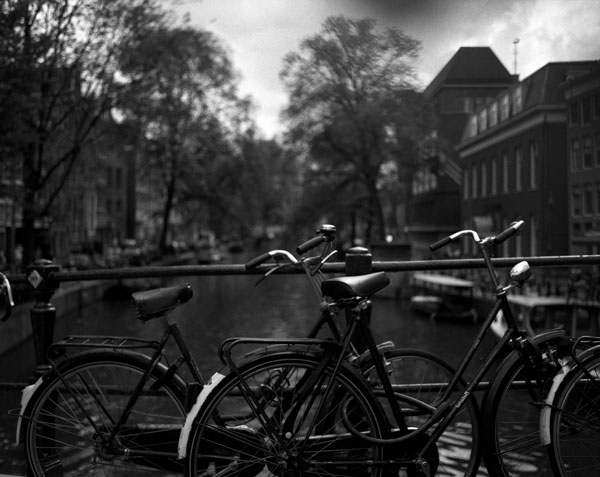
Bike Culture in Amsterdam: Feel Like a 5-Year-Old Again


Extracted this excellent piece on Amsterdam's Bike Culture from Seth Stevenson's "Should I Move to Amsterdam?" (click title to link to full article):

One night, strolling in the evening air, I happened by a theater as a play was letting out. A crowd of distinguished Amsterdammers poured onto the sidewalk. The men wore blazers and ties, the women wore dresses and cardigans. Most of these theater-goers were in their 50s and 60s, with wrinkles and bifocals and graying beards.

It looked like a scene you might witness any night in Manhattan, when a throng of well-dressed New Yorkers emerges from a downtown playhouse. But there was a key difference: The New Yorkers would stride toward the curb with one arm in the air, hailing a taxi. The Amsterdammers, by contrast, were unlocking their bicycles from nearby racks, hopping up on the pedals with a little two-step, and riding away.

I can't tell you how absurd it looked—and how utterly gleeful it made me—as these older couples, in prim evening wear, mounted their bikes and rode side-by-side into the night. They whooshed past me, pedaling with ease, and their conversations carried on undisturbed. The women's dresses fluttered about their ankles; the men's cigarette smoke trailed behind them.

"There's something about riding a bike that makes you feel like you're 5 years old," my American friend Carey, who lives and works here in Amsterdam, said to me. Indeed, these proper Dutch couples outside the theater seemed to morph, before my eyes, into bouncy little children. I half-expected the ladies to shriek, "Wheeeeee!" as their bikes picked up speed and rounded a corner out of sight.

The next day, totally inspired, I rented a bike from the shop by my hotel. (Of course, a helmet was unnecessary or at least unfashionable—no one wears them here. Nor do they wear Spandex shorts; or wristbands; or water-dispensing backpacks. They just hop on the bike and go, like normal people. You'll often see a mother with two kids perched on the bike holding groceries in one hand and a cell phone in the other.)

Since Amsterdam worships bicycles, there are separate bike paths on nearly every street. There are even bike-specific traffic lights to prevent you from careening into traffic. I still assumed that I had about a 70 percent chance of causing some sort of horrific accident (tram car, canal, Belgian tourist) but decided not to worry about it.

Within moments, I was zooming around the city, elbow-to-elbow in a pack of Dutch cyclists, feeling—yes, a bit like a 5-year-old. It was fantastic. I hadn't ridden a bike in a while, and I'd forgotten the tiny thrill of coasting along with the wind in my face ... standing on the pedals and leaning over the handlebars ... weaving back and forth down an empty street.

Ignoring the wonders this does for your fitness (everyone's thin here, with shapely calves) as well as for air pollution, perhaps the best thing about biking is the utter silence of it. At night, rolling along the elegant western canals, the only sound I'd hear was my own wheels rumbling on cobblestone streets (or the polite ding of another cyclist's bell; or the watery echoes of a boat passing beneath a bridge).

On weekend evenings, young couples go out on bike dates. She sits sidesaddle on the luggage rack above the rear wheel, her skirted legs crossed daintily. She wraps one arm around his waist, while the other lifts an umbrella over their heads to ward off the drizzle. (Every time I see this, I find it incredibly hot.)

Carey let me ride on the back of her bike for a minute, to see how it felt. It felt really painful. I lack the narrow Dutch ass one needs to sit comfortably on a metal luggage rack.

Source: slate.com

Atlanta Public School Board Approves the BeltLine TAD

In an important step for the BeltLine project, the Atlanta Board of Education voted December 12th to approve the BeltLine Tax Allocation District 7 to 0. This is the second of three votes on the TAD. On November 7th the Atlanta City Council voted overwhelmingly to approved the TAD 12 to 3.

Source: BeltLinePartnership.org

Thursday, December 08, 2005

Free Market Does Not Produce Sprawl

Some suburban dwellers hear criticism of sprawl as some sort of a value-laden condemnation of suburban life. They respond by launching a defense of sprawl that can be paraphrased with the following:

"What others deride as sprawl is actually just the free market at work, the result of millions of Americans choosing the lifestyle they prefer. And any effort to control or limit 'sprawl' is a misuse of government power promoted by elitists who want to instruct us common folk how to live."

Well, I've covered enough county commission and zoning board meetings to know that's just romantic mythology.

First of all, the free market, left to its own devices, produces dense development, not sprawl. Developers want to put as many units as possible on their property, because that's how they make the most profit; you don't see them going to court demanding the right to build fewer homes per acre.

Sprawl is possible only through intense government regulation. It is an artificial growth pattern achieved by laws that frustrate the free market's tendency toward density. The free market, left to its own devices, would never produce five-acre minimum lot sizes, or 2,500-square-foot minimum house sizes, or bans and moratoriums on apartments. The free market, left to its own devices, would produce growth patterns more like "smart-growth" policies.

Read more...

Source: ajc.com/opinion

Friday, December 02, 2005

Non-motorized Transportation Pilot Project = Trail + Rail

Section 1807 of The 2005 - 2009 Federal Transportation Bill, also know as SAFETEA-LU, has established a Non-motorized Transportation Pilot Program. The purpose of the pilot program is to demonstrate the extent to which bicycling and walking can carry a significant part of the transportation load, and represent a major portion of the transportation solution. The pilot program is currently limited to four communities which are identified in the legislation: Columbia, Missouri; Marin County, California; Minneapolis-St. Paul, Minnesota; and Sheboygan County, Wisconsin.

The Secretary will establish and carry out a nonmotorized transportation pilot program to construct in these four communities a network of nonmotorized transportation infrastructure facilities, including sidewalks, bicycle lanes, and pedestrian and bicycle trails, that connect directly with transit stations, schools, residences, businesses, recreation areas, and other community activity centers. The Program has allocated $100,000,000, divided equally amongst these four communities, over the next four years.

The ramifications for future Trail + Rail Initiatives in Atlanta, and specifically for towns on the SouthLine (ATL - Macon Commuter Rail), are significant and encouraging...

Wednesday, November 30, 2005

A Desire Named Streetcar


Georgia Aquarium founder Bernie Marcus said the streetcar is key to developing Peachtree and the rest of the city.

The streetcar "is not something that's cute and nice — it's a necessity," said Marcus. "If we are going to continue to grow in the community, we need a streetcar."

Read the article...

Watch a new video about the streetcar...

Monday, November 28, 2005

ATL-Lovejoy Commuter Rail: Economic Boon or Boondoggle for Boondocks?

Clayton County has the highest unemployment rate in metro Atlanta. Delta's bankruptcy is sure to exacerbate the problem.

Many southside citizens are starting to see the train as a "ticket to prosperity" with the projected revitalization of downtowns along the line, while others say Clayton's revitalization would have happened without commuter rail.

Read more...

Thursday, November 17, 2005

Beltline Tracks Facts

The Atlanta BeltlLne is actually made up of five “belt line” railroads: Southern Railway’s Decatur Belt in the northeast, the Atlanta & West Point Belt in the southeast and the Louisville & Nashville Belt in the southwest. The northwest is made up of both the Atlanta Birmingham & Coast Line (abandoned) and the Seaboard Air Line, which is still in operation by CSX.

Sunday, September 11, 2005

The Soup Peddler Publishes

If it's true that we are leaving the era of cheap oil, then the societal down-/re-scaling we are approaching need not be something to be feared. The return to communal relationships, working intimately with your neighbors, localized food production and enterprise, and human empowerment through walking and biking may be the best thing that ever happened to us and provide us with healthier bodies and more satisfied spirits than we could ever hope to get from the current culture of amusing ourselves to death.

One messiah leading the way to this brave new (but familiar) world is David Ansel, The Soup Peddler of Austin, Texas. His new book, The Soup Peddler's Slow & Difficult Soups: Recipes and Reveries is more than just a collection of recipes. Like he says in his book's introduction, "It's about how the mundane aspects of life, such as food and work, can be utterly consuming and rewarding, as long as they are humbly infused with your spirit and creativity. It's about how, when you involve your neighbors and friends in this joie de vivre, your community becomes an inspired and inspiring place. Finally, it's about how sharing yourself in this way foments tikkun olam, the repair of the world, which is a hopeful, participatory theory unto which one must cleave when civilization appears to be in rapid decline."

Visit The Soup Peddler online at www.thesouppeddler.com.

Tuesday, September 06, 2005

Eldrin Bell proposes Heritage Trail

Eldrin Bell wants Clayton County to be known for something besides political discord and youth violence. That's why Bell, the Clayton County Commission chairman, is proposing a Heritage Trail that will feature historic sites from the Civil War to the civil rights movement.

Bell announced the plan at a Clayton County Chamber of Commerce summit last week as part of a blueprint for economic growth in the county.

"Heritage is a word that's international, and I want to link the Heritage Trail tour with the proposed commuter rail line coming through the county," Bell said. "We have 181 historical sites in the county, and I envision drawing tourists to the county to see them."

While all the details have not been worked out, Bell's plans call for the trail to start in the Forest Park area where there is a proposed commuter rail stop and continue through Lovejoy to Macon.

"Economic development is best supplied by people from elsewhere. The Road to Tara Museum in Jonesboro, which has depictions from the Civil War, is the No. 1-visited site in the Atlanta area by people who don't live here," Bell said.

Read more...

Source: ajc.com

Georgia Tracks Facts

In an Aug. 8 editorial, "Don't railroad Amtrak," the Atlanta Journal-Constitution argued that "passenger rail is a transportation alternative worthy of Congress' support".... In an Aug. 23 AJC editorial, "Rail stuck in reverse," the newspaper chided the State Transportation Board for its reluctance to support Atlanta-Lovejoy train service, saying a decision to block the project would leave commuters "with little choice but to stew in their automobiles".... An editorial in McDonough's Daily Herald, "Let's support commuter rail," argued "a reasonably priced rail system could open up the counties south of Atlanta to tourists and others".... An 18-month study has concluded that commuter rail and light rail service could help ease congestion in and around Emory University in DeKalb County... Friends of the Beltline, a group that has been advocating a greenbelt-and-transit loop along railroad tracks surrounding downtown Atlanta, will merge with the Beltline Partnership, a new advisory committee appointed by Mayor Shirley Franklin... Ralph Reed, who is seeking the Republican nomination for Georgia lieutenant governor, has endorsed the Beltline plan... Gov. Sonny Perdue has appointed former Cobb County Judge G. Grant Bentley to review stalled contract negotiations between MARTA and its unionized workers... In what may come as a surprise to many outspoken MARTA critics in the Georgia General Assembly, the Government Finance Officers Association has awarded MARTA a Certificate of Achievement in Excellence in Financial Reporting for the 11th straight year... MARTA added extra trains between Aug. 3 and Aug. 6 to handle crowds from Megafest and several other major events occurring in Atlanta during that period... Long-delayed work to renovate Macon's Terminal Station, expected to become a stop for revived Atlanta-Macon train service, could begin shortly... The Atlanta Journal-Constitution is dropping its weekly "Horizon" section, which focused on local transportation and development issues; the newspaper says it will continue to cover those topics in its regular news pages.

Source: Jim Dexter, The Georgia Association of Railroad Passengers

Monday, September 05, 2005

James Howard Kunstler on Rail

America today has a railroad system that the Bulgarians would be ashamed of. Neither of the two major presidential candidates in 2004 mentioned railroads, but if we don't refurbish our rail system, then there may be no long-range travel or transport of goods at all a few decades from now. The commercial aviation industry, already on its knees financially, is likely to vanish. The sheer cost of maintaining gigantic airports may not justify the operation of a much-reduced air-travel fleet. Railroads are far more energy efficient than cars, trucks or airplanes, and they can be run on anything from wood to electricity. The rail-bed infrastructure is also far more economical to maintain than our highway network.

- The Long Emergency

Friday, July 22, 2005

BeltLine Economic Development Factoid

30,000 new jobs are expected to be created in the BeltLine area in the next 20-25 years. This job increase is 50 percent greater than what would be created without the BeltLine. In addition, during the development of the BeltLine, 48,000 construction jobs will be created.

Friday, July 15, 2005

"I have a favorite saying about transportation: 'If you plan cities for cars and traffic, you get cars and traffic. If you plan for people and places, you get people and places.' It sounds obvious, but when I make this point to audiences around the country, it's a real eye-opener. They love it. The power of this simple idea is that it reflects basic truths that are rarely acknowledged. One such truth is that more traffic and road capacity are not the inevitable result of growth. They are in fact the product of very deliberate choices that have been made (for us, not by us) to shape our communities around the private automobile. We as a society have the ability to make different choices--starting with the decision to design our streets as comfortable places for people..."

--Fred Kent, Project for Public Spaces

Thursday, July 14, 2005

"When you look at the Beltline, the construction of a streetcar would be so simple. I think transit will be an integral part of it, and I think it's going to come a lot quicker than people anticipate. You can't have density without transit."

- Developer Wayne Mason, who owns and plans to redevelop a key swath of land from I-85 to DeKalb Avenue along the rail line formerly owned by Norfolk-Southern and known as the Beltline

Tuesday, June 28, 2005

The Elderly Need TOD

The Atlanta Regional Commission board has adopted a policy that addresses seniors' needs and draws a clear link between their transportation requirements and land planning in the future.

With a 241 percent increase from 2000 to 2030 projected, ARC Chairman Sam Olens of Cobb County wants to see senior housing built within walking distance of drugstores and other shopping destinations.

Earlier this year, Cobb enacted a senior housing ordinance that allows denser housing in transportation corridors for people 55 or older.

Read more...

Thursday, June 23, 2005

H.O.T. on the Tracks

Hampton's Our Town [HOT], a Political Action Committee [PAC], has taken their public show of support for a commuter rail stop in Hampton to the next level. The latest effort, lead by Hampton citizen Ronnie Huggins, has resulted in the delivery of a signed proclamation by all four of Henry County's City Mayors to Gov. Sonny Perdue during a recent visit.

"The proclamation by the mayors is the most visible show of support for the project to date by a group of elected officials in Henry," says a recent AJC article.

Read more here...

Friday, June 17, 2005

Reason number 3 gajillion and 6 why commuter trains are good for the residents of metro Atlanta: http://moneycentral.msn.com/content/invest/extra/P116330.asp (thanks, Kathryn).