When man invented the bicycle he reached the peak of his attainments. Here was a machine of precision and balance for the convenience of man. And (unlike subsequent inventions for man's convenience) the more he used it, the fitter his body became. Here, for once, was a product of man's brain that was entirely beneficial to those who used it, and of no harm or irritation to others. Progress should have stopped when man invented the bicycle.
~ Elizabeth West, Hovel in the Hills
Thursday, September 28, 2006


Wednesday, September 27, 2006
Friday, September 22, 2006
Limo Steve's commuter math doesn't add up
Both the Atlanta-Athens proposal and its southside counterpart, the Atlanta-Lovejoy commuter rail plan, still face entrenched opposition from the Road Warriors, a small but powerful group that's determined to deny Georgia commuters any meaningful alternative to using highways. One of the most outspoken Road Warriors, Rep. Steve Davis (R-McDonough), recently renewed his attack on commuter rail with an op-ed piece in the Atlanta Journal-Constitution. He repeated his now-familiar litany of distortions, half-truths and untruths, starting with one of the most shopworn whoppers of all: the claim that "for the same amount of money" as setting up the Atlanta-Lovejoy line, "all passengers could be provided with a limousine to ride to work for 20 years." It shouldn't be necessary to rebut such an absurd assertion, but maybe it's time. Projections show that the Atlanta-Lovejoy line would carry 1500 riders in each direction by 2009. 1500 Lincoln Town Cars at $42,000 each would cost $63,000,000. The daily round-trip between Atlanta and Lovejoy would rack up 100,000 miles on those limos every three years, suggesting they'd need to be replaced at least five times during the 20-year period Davis specified. That brings the total limo price to $315,000,000 even before you take future inflation into account, and unfortunately, that's only the beginning. One expressway lane can carry about 1500 vehicles per hour, suggesting that in order to accommodate Davis's theoretical limo fleet, the state would have to widen Interstate 75 with one new lane in each direction over the 26 miles between Atlanta and Lovejoy. That's a total of 52 lane miles, and at the going price of $10 million per mile, that total road construction bill works out to $520,000,000. $520 million for the roads plus $315 million for the limos brings the grand total for the Davis scheme to $835 million, making the $106 million pricetag for commuter rail an absolute bargain by comparison. One of these days, somebody needs to clue Davis in on the fact that the way to fight traffic congestion is to take cars off the road, not to put more cars on the road.
Source: Georgia Association of Railroad Passengers September Newsletter
Source: Georgia Association of Railroad Passengers September Newsletter
Sunday, August 27, 2006
Rail Estate Rebate™
LiveNearMARTA.com features a unique Buyer's Incentive offered by New Urban Realty.
New Urban Realty will share their commission with those seeking location-efficient living within 1/2 mile of a MARTA Station (what they call "Rail Estate").
Those who partner with New Urban Realty in the purchase of transit-oriented housing can qualify for The Rail Estate Rebate™. The rebate gives the Buyer up to 1% of the sales price back after closing.
Find out more at http://livenearmarta.com/Rail_Estate_Rebate.html.
New Urban Realty will share their commission with those seeking location-efficient living within 1/2 mile of a MARTA Station (what they call "Rail Estate").
Those who partner with New Urban Realty in the purchase of transit-oriented housing can qualify for The Rail Estate Rebate™. The rebate gives the Buyer up to 1% of the sales price back after closing.
Find out more at http://livenearmarta.com/Rail_Estate_Rebate.html.
Saturday, August 26, 2006
Work Near MARTA? LiveNearMARTA.com
People are starting to realize that the old complaint that MARTA doesn't "go anywhere" isn't true anymore as places like Decatur, Lindbergh, and Perimeter Center continue to evolve into vibrant transit villages with homes, businesses, shopping, and entertainment within easy walking distance of their respective MARTA stations.
It's logical that people are moving back into Atlanta. People are seeking alternative transportation solutions as gas prices, commute times, carbon dioxide levels, and global temperatures continue to rise.
Location-efficient living near a MARTA station makes more sense than ever, especially if you work near one.
New Urban Realty has a new portal at www.livenearmarta.com that features listings of "Rail Estate" or homes within 1/2 mile of a MARTA station.
You can also use the Station Search: Tell them which Station you would like to live near and they will customize a search for homes in the vicinity of the station.
It's logical that people are moving back into Atlanta. People are seeking alternative transportation solutions as gas prices, commute times, carbon dioxide levels, and global temperatures continue to rise.
Location-efficient living near a MARTA station makes more sense than ever, especially if you work near one.
New Urban Realty has a new portal at www.livenearmarta.com that features listings of "Rail Estate" or homes within 1/2 mile of a MARTA station.
You can also use the Station Search: Tell them which Station you would like to live near and they will customize a search for homes in the vicinity of the station.
Tuesday, August 22, 2006
Transit Oriented Development for Tomorow's Child
There's lots of fronts to fight on in the war against global warming. Transit-Oriented Development is a significant one that can do serious damage to our oil dependency. It's easy to get battle-weary, though, in the daily struggle against status quo, inertia, apathy, greed and deception.
One thought that keeps me in the battle is the legacy we leave our children. The following video and poem are powerful motivators for me.
Tomorrow's Child
Without a name; an unseen face
and knowing not your time nor place
Tomorrow's Child, though yet unborn,
I met you first last Tuesday morn.
A wise friend introduced us two,
and through his shining point of view
I saw a day which you would see;
A day for you, and not for me.
Knowing you has changed my thinking
for I never had an inkling
That perhaps the things I do
might someday, somehow, threaten you.
Tomorrow's Child, my daughter-son
I'm afraid I've just begun
To think of you and of your good,
Though always having known I should.
Begin I will to weigh the cost
of what I squander; what is lost
If ever I forget that you
will someday come to live here too.
Glenn Thomas, © 1996
One thought that keeps me in the battle is the legacy we leave our children. The following video and poem are powerful motivators for me.
Tomorrow's Child
Without a name; an unseen face
and knowing not your time nor place
Tomorrow's Child, though yet unborn,
I met you first last Tuesday morn.
A wise friend introduced us two,
and through his shining point of view
I saw a day which you would see;
A day for you, and not for me.
Knowing you has changed my thinking
for I never had an inkling
That perhaps the things I do
might someday, somehow, threaten you.
Tomorrow's Child, my daughter-son
I'm afraid I've just begun
To think of you and of your good,
Though always having known I should.
Begin I will to weigh the cost
of what I squander; what is lost
If ever I forget that you
will someday come to live here too.
Glenn Thomas, © 1996
Sunday, August 20, 2006
BeltLine.net: Stay in the Loop™
Can you see yourself living and working in the BeltLine? Planning to move or already a resident of the area? Then BeltLine.net is just for you! BeltLine.net is planned as a robust community portal featuring real estate, news, business, restaurants, forums, photos, job boards, coupons and just about everything else associated with the community the BeltLine is becoming. BeltLine.net is intended to foster that community and promote local buying in the BeltLine.
Email info@beltline.net for launch date and stay in the loop™
Email info@beltline.net for launch date and stay in the loop™
Monday, August 14, 2006
Chairman Mike Evans Cycles Across Iowa
ATLANTA -- State Transportation Board Chairman Mike Evans participated in the longest, largest and oldest touring bicycle ride in the world. The Register's Annual Great Bicycle Ride Across Iowa (RAGBRAI) is an annual seven-day bicycle ride across the state. The ride started July 23rd in Sergeant Bluff, Iowa's western border and ended July 29th in Muscatine, along the eastern border at the Mississippi River.
“The first thing I want people to know and understand is that they have a State Transportation Board that is open minded and interested in transportation alternatives,” said Evans. As an avid cyclist, Chairman Evans took a break from discussing highways, bridges and transportation funding issues to participate in the ride 472-mile, seven day trip with a group of 8,500 cyclists including Lance Armstrong.
The group trekked a daily mileage average of 68 miles with an optional one day 17 mile loop called the century loop for cyclists wanting the extra challenge.
Profits from the RAGBRAI ride are given to non-profit Iowa programs and organizations through the Des Moines Register newspaper’s community investment program. The program addresses priority issues in regards to families and children, literacy and community enrichment.
“Cycling is not only an excellent way to stay in shape, but also provides transportation alternatives besides cars, trains and buses,” Evans said. “I have been participating in bicycle rides for years and I intend to bring more awareness to cycling as a sport and a transportation alternative during my tenure as Board Chairman.”
For more information on bicycle safety and GDOT’s Statewide Bicycle and Pedestrian Plan, please visit our website at www.dot.state.ga.us/bikeped/ and for more information about the 33rd annual RAGBRAI go to www.ragbrai.org.
“The first thing I want people to know and understand is that they have a State Transportation Board that is open minded and interested in transportation alternatives,” said Evans. As an avid cyclist, Chairman Evans took a break from discussing highways, bridges and transportation funding issues to participate in the ride 472-mile, seven day trip with a group of 8,500 cyclists including Lance Armstrong.
The group trekked a daily mileage average of 68 miles with an optional one day 17 mile loop called the century loop for cyclists wanting the extra challenge.
Profits from the RAGBRAI ride are given to non-profit Iowa programs and organizations through the Des Moines Register newspaper’s community investment program. The program addresses priority issues in regards to families and children, literacy and community enrichment.
“Cycling is not only an excellent way to stay in shape, but also provides transportation alternatives besides cars, trains and buses,” Evans said. “I have been participating in bicycle rides for years and I intend to bring more awareness to cycling as a sport and a transportation alternative during my tenure as Board Chairman.”
For more information on bicycle safety and GDOT’s Statewide Bicycle and Pedestrian Plan, please visit our website at www.dot.state.ga.us/bikeped/ and for more information about the 33rd annual RAGBRAI go to www.ragbrai.org.
Monday, July 31, 2006
Downtown Jonesboro Rail Estate
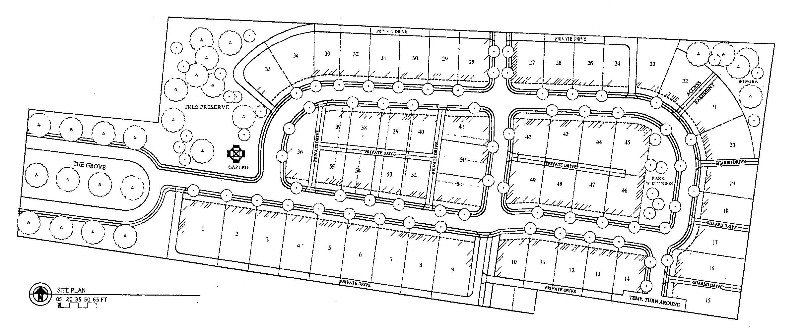
Seeking a builder with experience building historically-styled homes, willing and able to take down 55 lots.
Several acres have been successfully zoned for a 55 lot neo-traditional subdivision which will feature homes reflecting the historic vernacular of downtown Jonesboro including rear-loading, alley-fed garages. The city has awarded the effort with an H2, live/work zoning. The homes, when constructed, will be within walking distance of the proposed Commuter Rail Station. Jonesboro is an LCI grant recipient and has begun downtown revitalization. This project will flow seamlessly with those efforts.
The project has been named "The Grove" in homage to the old pecan grove which will serve as the primary entrance/exit to the subdivision. Great care is being taken to construct the roads in the rows between trees creating a dramatic entrance statement.
A tree survey was done, identifying the older trees on the property. These trees will be preserved in a park encompassing approximately 20% of the property.
In short, the project has the potential for a trend-setting,"forward to the past" direction for the city.
Interested parties please email Burke Sisco of MainStreet Realty at burke@burkesisco.com.
Thursday, July 27, 2006
A-Bike for A-to-B on Atlanta Beltline
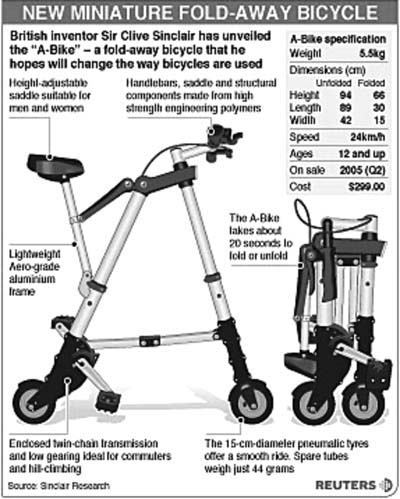
As those who live along the BeltLine become more transit-oriented in their lifestyles, we will see the steady emergence of creative transportation solutions to the "first mile" and "last mile."
The A-Bike is one example. It's a fully functional bicycle that can be folded down to roughly the size of an umbrella and carried on a trolley...
Wednesday, July 26, 2006
Will living on the BeltLine have a positive impact on your belt line?
Obesity is at an all-time high in the United States. Asthma, diabetes, and high blood pressure plague an increasing number of Americans. These health problems have been tied, in part, to the very fabric of the places where we live and work. The relationship between health and the built environment is clear, yet little has been done to take a prospective look at the health-related impacts of proposed projects and policies, at least in the United States.
This gap is being filled by a Health Impact Assessment, or HIA, of the proposed Atlanta BeltLine that is being conducted by Georgia Tech’s Center for Quality Growth and Regional Development (CQGRD), with assistance from the Centers for Disease Control and Prevention and funding from the Robert Wood Johnson Foundation.
The BeltLine project would convert a partly abandoned railroad that circles downtown Atlanta into a transit corridor and multi-use trail connected to an expanded city park system and targeted areas for redevelopment.
CQGRD and CDC are using HIA tools — techniques applied in many European countries — to ascertain the potential health impacts of the BeltLine project. The HIA will identify both positive and negative impacts, paying special attention to the distribution of effects to determine if at-risk populations are subject to particular negative impacts.
“The BeltLine assessment is an opportunity to place health considerations at the forefront of the policy and project decision-making process,” said Catherine L. Ross, Harry West Professor and Director of CQGRD.
The BeltLine HIA will be completed by the end of 2006 and the findings will be disseminated to local officials and the public."
For more information on the CQGRD HIA click here.
Source: Karen Leone de Nie, research scientist, Georgia Institute of Technology, Atlanta
This gap is being filled by a Health Impact Assessment, or HIA, of the proposed Atlanta BeltLine that is being conducted by Georgia Tech’s Center for Quality Growth and Regional Development (CQGRD), with assistance from the Centers for Disease Control and Prevention and funding from the Robert Wood Johnson Foundation.
The BeltLine project would convert a partly abandoned railroad that circles downtown Atlanta into a transit corridor and multi-use trail connected to an expanded city park system and targeted areas for redevelopment.
CQGRD and CDC are using HIA tools — techniques applied in many European countries — to ascertain the potential health impacts of the BeltLine project. The HIA will identify both positive and negative impacts, paying special attention to the distribution of effects to determine if at-risk populations are subject to particular negative impacts.
“The BeltLine assessment is an opportunity to place health considerations at the forefront of the policy and project decision-making process,” said Catherine L. Ross, Harry West Professor and Director of CQGRD.
The BeltLine HIA will be completed by the end of 2006 and the findings will be disseminated to local officials and the public."
For more information on the CQGRD HIA click here.
Source: Karen Leone de Nie, research scientist, Georgia Institute of Technology, Atlanta
Monday, July 17, 2006
PRO-COMMUTER RAIL GROUP CALLS AUDIT REQUEST "CYNICAL"
July 14, 2006
An audit request by a Georgia legislator is another blatant attempt by the highway lobby to block commuter rail, says a pro-train group.
The Georgia Association of Railroad Passengers blasted House Appropriations Chairman Ben Harbin (R-Evans) for demanding an audit of the state's commuter rail program, calling the move a cynical attempt to stifle growing demands for train service.
"Rep. Harbin's request had nothing to do with protecting the public," said GARP President Steve Vogel. "It has everything to do with his virulent opposition to commuter rail.
"Harbin has already admitted responsibility for the Georgia Train Robbery," said Vogel, referring to an unpublicized 11th-hour alteration of budget legislation that prompted the State Transportation Board to suspend activity on the Atlanta-Lovejoy line.
"Harbin's audit request is just the latest evidence he'll stop at nothing to deny Atlanta-area commuters the option of riding trains," said Vogel.
In an interview with the Atlanta Journal-Constitution, Harbin suggested an audit would shed light on why no trains are running, despite ten years of studies.
"If Rep. Harbin really wants to know why nothing's happening, all he has to do is look in the mirror," suggested Vogel. "Harbin and people like Harbin have blocked commuter rail at every turn."
GARP is an independent grassroots citizens organization that advocates rail service as part of a balanced transportation system for Georgia.
FOR MORE INFORMATION:
STEVE VOGEL, GARP PRESIDENT: 404-373-7530
JIM DEXTER, GARP VICE PRESIDENT: 404-687-8753
garprail@bellsouth.net
An audit request by a Georgia legislator is another blatant attempt by the highway lobby to block commuter rail, says a pro-train group.
The Georgia Association of Railroad Passengers blasted House Appropriations Chairman Ben Harbin (R-Evans) for demanding an audit of the state's commuter rail program, calling the move a cynical attempt to stifle growing demands for train service.
"Rep. Harbin's request had nothing to do with protecting the public," said GARP President Steve Vogel. "It has everything to do with his virulent opposition to commuter rail.
"Harbin has already admitted responsibility for the Georgia Train Robbery," said Vogel, referring to an unpublicized 11th-hour alteration of budget legislation that prompted the State Transportation Board to suspend activity on the Atlanta-Lovejoy line.
"Harbin's audit request is just the latest evidence he'll stop at nothing to deny Atlanta-area commuters the option of riding trains," said Vogel.
In an interview with the Atlanta Journal-Constitution, Harbin suggested an audit would shed light on why no trains are running, despite ten years of studies.
"If Rep. Harbin really wants to know why nothing's happening, all he has to do is look in the mirror," suggested Vogel. "Harbin and people like Harbin have blocked commuter rail at every turn."
GARP is an independent grassroots citizens organization that advocates rail service as part of a balanced transportation system for Georgia.
FOR MORE INFORMATION:
STEVE VOGEL, GARP PRESIDENT: 404-373-7530
JIM DEXTER, GARP VICE PRESIDENT: 404-687-8753
garprail@bellsouth.net
Friday, June 30, 2006
Commuter Rail Bike Coach = Trail + Rail Solution in Massachusetts
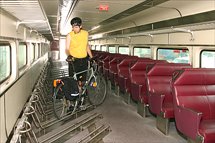
According to a June 23rd Massachusetts Bay Transportation Authority
(MBTA) news release, "MBTA General Manager Daniel A. Grabauskas today
announced the first ever commuter rail coach equipped with 40
stationary bike racks. Renovated to accommodate the many bike
enthusiasts who travel on the Gloucester commuter rail line throughout
the summer, the new coach will debut July 2nd during the 'Ride To The
Races' 47th Annual Fitchburg Longsjo Classic. MBTA General Manager
Grabauskas directed his staff to schedule an extra passenger train
after organizers of the Longsjo Classic approached the MBTA.
"The passenger train includes a new renovated bike coach that
accommodates 42 customers and 40 bicycles. 'The timing is perfect. With
the bike car ready to roll, it only makes sense to debut it for a
cycling event,' said MBTA General Manager Grabauskas. 'By giving people
yet another reason to choose public transportation, we continue our
efforts to attract more customers by making the system easier to use
and a lot more convenient. This is what quality customer service is all
about.'..."
Source: CenterLines, the e-newsletter of the National Center for Bicycling & Walking
Tuesday, May 16, 2006
Pruett's Pipe Dream: Commuter Rail to Canton
Canton mayor has a track record of turning dreams into reality
Beware of "Pruett's Pipe Dreams." They might just come true.
Cecil Pruett, mayor of Canton — the Cherokee county seat — since 1996, came to office with so many ideas that town residents began to refer to them as "Pruett's Pipe Dreams."
He wanted the city to buy and restore an old theater downtown. Done.
He wanted the city to create its own bus transit system offering free rides for everyone. Done.
He wanted Canton's downtown area to have new sidewalks, pedestrian crossings, flower pots, new lighting and street furniture. Done.
He wanted the vacant buildings downtown to be filled with businesses. Done.
Now Pruett wants the city to transform a 130-acre area next to the center of town into a thriving community with residences, quality retail, parks and restored historic buildings.
Five years ago, Canton received one of the Atlanta Regional Commission's Livable Centers Initiative grants to design a plan for that transformation. Since then, Canton has been busy implementing physical public improvements to the area to prepare it for development.
A recently formed advocacy group, the Livable Communities Coalition, has selected Canton as one of its first four projects to help find solutions to turn the plans into reality, according to Jim Durrett, the coalition's executive director. "You've got a real jewel of an opportunity here, and we want to share that story," Durrett told Pruett last week. "You have an opportunity to be a great example for the region."
For Pruett, working with the coalition is another way to turn his dreams into reality. In fact, Pruett has a long history of finding partners and joining forces. Two women instrumental in the renaissance of Canton are Melanie Whitt, Canton's director of economic development since 1996; and Marie Garrett, a planning consultant who has helped the city adopt new zoning ordinances and develop its plans.
While Whitt and Garrett are quick to credit Pruett for providing the vision, they have become a two-woman tag team adept at securing grants and support from various government agencies.
The centerpiece of Pruett's latest pipe dream is the River Mill District, anchored by a 1900 textile mill that closed in 1981. The mill stands next to the railroad tracks, near a large green field that leads to the Etowah River. A restored mill, along with new development, would help Canton open back up to its origins — the river and the railroad.
Plus, it would be a way to extend the efforts that have transformed downtown Canton to include a larger area.
"We want to create parks and recreation along the river and preserve that area," Pruett says. "We want to put together a complete city with jobs, shopping, parks — the things people need and want to make their lives complete."
For him, the 130-acre district enables Canton "to do something very, very special that creates excitement and involvement in a close-knit area."
Still, the project is complicated. The land is owned by various private property owners. The existing mill villages have tiny streets with no room for sidewalks. The topography of Canton is extremely hilly, making development more difficult. And the flat areas near the river are in the flood plain — which can best be used for passive green space rather than for infill development.
But it's not as though Pruett and his gang haven't overcome challenges before. Pruett moved to Canton 40 years ago to work in private business. In his job, he was able to travel the world — Japan, China, Europe and South Africa — to see how cities worked in other countries.
"When my wife talked me into running for mayor, I felt like our city was at a crossroads," Pruett says. "We could become an also-ran, or we could become a city that was very special. We had an opportunity to plan our city before we were inundated with the growth we knew was coming."
In 1990, Canton's population was 4,980; in 2000, it had climbed to 7,780. Whitt says estimates show the city has close to 15,000 residents, and it is projected to have as many as 44,000 residents by 2015. The community also is diverse, with a Latino population of more than 20 percent.
Because its population could triple in 10 years, Canton wants to make sure it grows so that its residents can attain a high quality of life.
That's where the coalition comes in.
The coalition is partnering with Canton to build consensus among property owners, to help remove any obstacles and to help generate development interest in the community.
Meanwhile, Pruett and his team continue to dream. They hope that one day, sooner rather than later, Canton will be connected to the region with a commuter rail stop. In the meantime, its bus service carries riders so they can connect to CCT (Cobb Community Transit), which has routes to several spots, including downtown Atlanta. Canton provides a beacon for our region by demonstrating how leadership and planning help create healthy communities.
So keep on dreaming, Mayor Pruett.
By Maria Saporta
Beware of "Pruett's Pipe Dreams." They might just come true.
Cecil Pruett, mayor of Canton — the Cherokee county seat — since 1996, came to office with so many ideas that town residents began to refer to them as "Pruett's Pipe Dreams."
He wanted the city to buy and restore an old theater downtown. Done.
He wanted the city to create its own bus transit system offering free rides for everyone. Done.
He wanted Canton's downtown area to have new sidewalks, pedestrian crossings, flower pots, new lighting and street furniture. Done.
He wanted the vacant buildings downtown to be filled with businesses. Done.
Now Pruett wants the city to transform a 130-acre area next to the center of town into a thriving community with residences, quality retail, parks and restored historic buildings.
Five years ago, Canton received one of the Atlanta Regional Commission's Livable Centers Initiative grants to design a plan for that transformation. Since then, Canton has been busy implementing physical public improvements to the area to prepare it for development.
A recently formed advocacy group, the Livable Communities Coalition, has selected Canton as one of its first four projects to help find solutions to turn the plans into reality, according to Jim Durrett, the coalition's executive director. "You've got a real jewel of an opportunity here, and we want to share that story," Durrett told Pruett last week. "You have an opportunity to be a great example for the region."
For Pruett, working with the coalition is another way to turn his dreams into reality. In fact, Pruett has a long history of finding partners and joining forces. Two women instrumental in the renaissance of Canton are Melanie Whitt, Canton's director of economic development since 1996; and Marie Garrett, a planning consultant who has helped the city adopt new zoning ordinances and develop its plans.
While Whitt and Garrett are quick to credit Pruett for providing the vision, they have become a two-woman tag team adept at securing grants and support from various government agencies.
The centerpiece of Pruett's latest pipe dream is the River Mill District, anchored by a 1900 textile mill that closed in 1981. The mill stands next to the railroad tracks, near a large green field that leads to the Etowah River. A restored mill, along with new development, would help Canton open back up to its origins — the river and the railroad.
Plus, it would be a way to extend the efforts that have transformed downtown Canton to include a larger area.
"We want to create parks and recreation along the river and preserve that area," Pruett says. "We want to put together a complete city with jobs, shopping, parks — the things people need and want to make their lives complete."
For him, the 130-acre district enables Canton "to do something very, very special that creates excitement and involvement in a close-knit area."
Still, the project is complicated. The land is owned by various private property owners. The existing mill villages have tiny streets with no room for sidewalks. The topography of Canton is extremely hilly, making development more difficult. And the flat areas near the river are in the flood plain — which can best be used for passive green space rather than for infill development.
But it's not as though Pruett and his gang haven't overcome challenges before. Pruett moved to Canton 40 years ago to work in private business. In his job, he was able to travel the world — Japan, China, Europe and South Africa — to see how cities worked in other countries.
"When my wife talked me into running for mayor, I felt like our city was at a crossroads," Pruett says. "We could become an also-ran, or we could become a city that was very special. We had an opportunity to plan our city before we were inundated with the growth we knew was coming."
In 1990, Canton's population was 4,980; in 2000, it had climbed to 7,780. Whitt says estimates show the city has close to 15,000 residents, and it is projected to have as many as 44,000 residents by 2015. The community also is diverse, with a Latino population of more than 20 percent.
Because its population could triple in 10 years, Canton wants to make sure it grows so that its residents can attain a high quality of life.
That's where the coalition comes in.
The coalition is partnering with Canton to build consensus among property owners, to help remove any obstacles and to help generate development interest in the community.
Meanwhile, Pruett and his team continue to dream. They hope that one day, sooner rather than later, Canton will be connected to the region with a commuter rail stop. In the meantime, its bus service carries riders so they can connect to CCT (Cobb Community Transit), which has routes to several spots, including downtown Atlanta. Canton provides a beacon for our region by demonstrating how leadership and planning help create healthy communities.
So keep on dreaming, Mayor Pruett.
By Maria Saporta
Thursday, May 11, 2006
Rail Visionary keeps on a-rollin'
Dealmaker Emory Morsberger has grand visions for commuter rail and revamping downtown Atlanta
Emory Morsberger, self-described "redeveloper," knows the art of the deal. And the deals he sculpts are reshaping a good bit of Georgia landscape.
You want to ride a train that actually gets you someplace in Georgia? Talk to Morsberger, the indefatigable locomotive behind the planned Athens-to-Atlanta commuter "Brain Train."
You want a face-lift for an Atlanta mega-landmark? Call Morsberger, who asked the obvious question: "How's a white guy from Gwinnett end up with the biggest building in Atlanta?" The building is the 80-year-old, 2-million-square-foot Sears warehouse on Ponce de Leon Boulevard -- Atlanta's City Hall East for the last 15 years.
The simple answer to Morsberger's question is money. He offered $35 million, $15 million more than the nearest competitor. But a better answer is his style. Whatever he does, he couches in terms of a higher calling: making a town a better place to live, or offering road-weary commuters a break from the glacially slow I-85 traffic.
Pardon our skepticism when those words come from a developer's mouth. But Morsberger brings some credibility along with them.
What's not to like about a guy who, when he planned the $400 million Sears building restoration, ensured that new residents will include disabled citizens, who also will get preference in hiring by retailers located in the project?
The one-time Republican state legislator even wins accolades from leading Democrats. "He's a Republican, but I like him," said former Gov. Roy Barnes. "A darn good guy when it comes to vision." Atlanta Mayor Shirley Franklin called him "wonderful."
There's a subtle reason a Democrat would like Morsberger: the hidden power in his pro-transit argument. Morsberger's been pushing the Athens-to-Atlanta commuter line since 2005 as a way not only to un-stuff suburban roads, but to connect Atlanta-area universities with the University of Georgia. That's why he calls it the Brain Train.
He recently released a poll that showed a 71-19 percent Gwinnett County majority in favor of the commuter rail. "A landslide in any language," said pollster Mark Roundtree of Duluth-based Landmark Group. "And Republicans favored the train by 1 percentage point more than Democrats."
That dispels the myth that transit is only for Birkenstock-wearing city folk. Couple that with the poll's findings on gubernatorial contenders, and you have the makings of a political earthquake. In Republican Gwinnett, incumbent Sonny Perdue scored only a 61 percent favorable rating. Democrats Cathy Cox and Mark Taylor were at 49 percent and 30 percent, respectively.
Perdue represents his roots: rural, white Georgia. He's been no friend of Atlanta or, for that matter, even heavily Republican suburban Gwinnett. And he's no fan of transit; it's synonymous with GOP-reviled Atlanta. So, if Perdue doesn't weigh in on behalf of the Athens-Atlanta train, Cox has the opportunity to surf the pro-rail groundswell. She might even overcome Perdue's 12-point lead, capture Gwinnett -- and that could be the tipping point for Georgia. All it would take would be Cox saying, "I vow that in 60 months, that train will be running."
Morsberger didn't want to get political -- although he admitted anger at the GOP-dominated Legislature's 11th-hour insertion into the budget of a resolution that makes it much harder to spend state money on commuter rail. It wrecked the purchase of train cars for a south-metro commuter rail to Lovejoy. And "it will slow down [the Athens-Atlanta project], but won't stop us," he frowned.
To see Morsberger's passion -- for the train or for the Sears building, which he has renamed Ponce Park -- look at what he already has accomplished.
Take Lawrenceville, the Gwinnett County seat. Well, almost no one would have taken the bedraggled town five or six years ago. "I said, 'I want to do something'" about Lawrenceville, where his Morsberger Group is based. "I had a vision about what I wanted to do."
Knowing what happens when a major player starts eyeing big chunks of real estate -- the prices quickly soar -- Morsberger employed stealth. Using 20 or so different corporate names, he started buying up rundown buildings.
"Our president is Rod Britton, and he's African-American," Morsberger said with a big grin. "So we presented him as a gay black hairdresser who wanted to open Sweet Rod's Hair Salon" in order to snare one building.
With boyish mischievousness, he added, "Reporters would call. They'd say they'd heard something. I'd say, 'Oh?' They said they could look it up in the official records. I'd say, 'Oh?' They could look all they wanted. But we were using so many names, well, we never lied, but we did what we set out to do."
After Morsberger acquired about two dozen properties, local owners figured out the plan. Pointing out from his office to the nearby First Baptist Church, Morsberger recalled, "They were all members of the same church, and got together to talk. But by that time, we'd acquired a critical mass. And look at Lawrenceville today." Nice shops, bustling eateries. Not much bad you can say, except for traffic congestion in the town square.
Morsberger, a Maryland native, likes to rattle off dates -- March 14, 2003, for example, when a real estate broker first gave him the idea of acquiring the Sears building. Or, Sept. 5, 1989, when a thief breaking into his car shot Morsberger in the leg and propelled him to successfully run for the Legislature on an anti-crime platform. Or primary Election Day 1992, when Morsberger, a pro-choice Republican, lost to John Linder. "I'm glad I got into politics," Morsberger said. "I'm glad I lost. That got me to where I am today."
Or the day a year ago when he missed a daughter's birthday while sitting on I-85. "We'll improve people's lives if we give them alternatives to cars," he said.
Where will he be tomorrow? Morsberger is eyeing a huge chunk of land south of Atlanta's downtown. "We're going to take the city's skid row and turn it into a nice neighborhood."
By John Sugg
Emory Morsberger, self-described "redeveloper," knows the art of the deal. And the deals he sculpts are reshaping a good bit of Georgia landscape.
You want to ride a train that actually gets you someplace in Georgia? Talk to Morsberger, the indefatigable locomotive behind the planned Athens-to-Atlanta commuter "Brain Train."
You want a face-lift for an Atlanta mega-landmark? Call Morsberger, who asked the obvious question: "How's a white guy from Gwinnett end up with the biggest building in Atlanta?" The building is the 80-year-old, 2-million-square-foot Sears warehouse on Ponce de Leon Boulevard -- Atlanta's City Hall East for the last 15 years.
The simple answer to Morsberger's question is money. He offered $35 million, $15 million more than the nearest competitor. But a better answer is his style. Whatever he does, he couches in terms of a higher calling: making a town a better place to live, or offering road-weary commuters a break from the glacially slow I-85 traffic.
Pardon our skepticism when those words come from a developer's mouth. But Morsberger brings some credibility along with them.
What's not to like about a guy who, when he planned the $400 million Sears building restoration, ensured that new residents will include disabled citizens, who also will get preference in hiring by retailers located in the project?
The one-time Republican state legislator even wins accolades from leading Democrats. "He's a Republican, but I like him," said former Gov. Roy Barnes. "A darn good guy when it comes to vision." Atlanta Mayor Shirley Franklin called him "wonderful."
There's a subtle reason a Democrat would like Morsberger: the hidden power in his pro-transit argument. Morsberger's been pushing the Athens-to-Atlanta commuter line since 2005 as a way not only to un-stuff suburban roads, but to connect Atlanta-area universities with the University of Georgia. That's why he calls it the Brain Train.
He recently released a poll that showed a 71-19 percent Gwinnett County majority in favor of the commuter rail. "A landslide in any language," said pollster Mark Roundtree of Duluth-based Landmark Group. "And Republicans favored the train by 1 percentage point more than Democrats."
That dispels the myth that transit is only for Birkenstock-wearing city folk. Couple that with the poll's findings on gubernatorial contenders, and you have the makings of a political earthquake. In Republican Gwinnett, incumbent Sonny Perdue scored only a 61 percent favorable rating. Democrats Cathy Cox and Mark Taylor were at 49 percent and 30 percent, respectively.
Perdue represents his roots: rural, white Georgia. He's been no friend of Atlanta or, for that matter, even heavily Republican suburban Gwinnett. And he's no fan of transit; it's synonymous with GOP-reviled Atlanta. So, if Perdue doesn't weigh in on behalf of the Athens-Atlanta train, Cox has the opportunity to surf the pro-rail groundswell. She might even overcome Perdue's 12-point lead, capture Gwinnett -- and that could be the tipping point for Georgia. All it would take would be Cox saying, "I vow that in 60 months, that train will be running."
Morsberger didn't want to get political -- although he admitted anger at the GOP-dominated Legislature's 11th-hour insertion into the budget of a resolution that makes it much harder to spend state money on commuter rail. It wrecked the purchase of train cars for a south-metro commuter rail to Lovejoy. And "it will slow down [the Athens-Atlanta project], but won't stop us," he frowned.
To see Morsberger's passion -- for the train or for the Sears building, which he has renamed Ponce Park -- look at what he already has accomplished.
Take Lawrenceville, the Gwinnett County seat. Well, almost no one would have taken the bedraggled town five or six years ago. "I said, 'I want to do something'" about Lawrenceville, where his Morsberger Group is based. "I had a vision about what I wanted to do."
Knowing what happens when a major player starts eyeing big chunks of real estate -- the prices quickly soar -- Morsberger employed stealth. Using 20 or so different corporate names, he started buying up rundown buildings.
"Our president is Rod Britton, and he's African-American," Morsberger said with a big grin. "So we presented him as a gay black hairdresser who wanted to open Sweet Rod's Hair Salon" in order to snare one building.
With boyish mischievousness, he added, "Reporters would call. They'd say they'd heard something. I'd say, 'Oh?' They said they could look it up in the official records. I'd say, 'Oh?' They could look all they wanted. But we were using so many names, well, we never lied, but we did what we set out to do."
After Morsberger acquired about two dozen properties, local owners figured out the plan. Pointing out from his office to the nearby First Baptist Church, Morsberger recalled, "They were all members of the same church, and got together to talk. But by that time, we'd acquired a critical mass. And look at Lawrenceville today." Nice shops, bustling eateries. Not much bad you can say, except for traffic congestion in the town square.
Morsberger, a Maryland native, likes to rattle off dates -- March 14, 2003, for example, when a real estate broker first gave him the idea of acquiring the Sears building. Or, Sept. 5, 1989, when a thief breaking into his car shot Morsberger in the leg and propelled him to successfully run for the Legislature on an anti-crime platform. Or primary Election Day 1992, when Morsberger, a pro-choice Republican, lost to John Linder. "I'm glad I got into politics," Morsberger said. "I'm glad I lost. That got me to where I am today."
Or the day a year ago when he missed a daughter's birthday while sitting on I-85. "We'll improve people's lives if we give them alternatives to cars," he said.
Where will he be tomorrow? Morsberger is eyeing a huge chunk of land south of Atlanta's downtown. "We're going to take the city's skid row and turn it into a nice neighborhood."
By John Sugg
Monday, May 08, 2006
Transit-trailing Atlanta risks being left at the station
As state leaders block every attempt to develop passenger rail in the region, metro Atlanta is losing its competitive edge.
Nearly every other major metro area in the country has jumped on the passenger rail movement --- recognizing how valuable transit and trains are to their economic future.
Yet in Georgia, a few state legislators have successfully done everything they can to kill commuter rail in metro Atlanta. The latest example occurred last month when state legislators inserted "midnight language" in the budget bill to withhold state funds for "any commuter rail passenger facilities unless otherwise especially appropriated."
That language has given board members of the Georgia Department of Transportation an excuse to yet again delay efforts to implement the region's first commuter rail service --- a line would run from Atlanta to Lovejoy and eventually extend to Griffin and Macon.
Gov. Sonny Perdue can veto that language today or tomorrow --- sending a clear signal to transportation leaders that we must move forward with commuter rail. But up to now, Perdue has done little to support commuter trains or transit.
The lack of any progress on rail transit in metro Atlanta has ominous implications. As other metro areas move forward to provide transportation options for their residents, we continue to be stuck in traffic jams.
Otis White, president of Atlanta-based Civic Strategies, tracks urban trends in the top 20 cities in the country. His research shows that 17 of those cities are committed to rail transit.
The three that aren't are Detroit, where regional leaders feel it's too late for the Michigan city; Tampa, where leaders question whether the city is big enough to support rail; and Atlanta.
"Atlanta is truly the odd metro out," White says. "These other metropolitan areas are going as hard and as fast as they can to build rail transit, and we're not."
Once metro Atlanta had a two-decade lead over these other cities when it built its MARTA system. But sadly, transit growth was stopped in its tracks.
"We were 10 to 15 years ahead of Dallas, and now they are far ahead of us in transit," White says. "Today, they have got the model big city transit system in the country."
Dallas is not alone. From Chicago to Denver, from Washington to Seattle and from Miami to Minneapolis, urban areas are building rail transit.
A striking example is Houston, once viewed as one of the most auto-oriented, sprawling metro areas in the country.
"Houston, the oil capital of the country is building rail transit as fast and as furious as it can, and voters are supporting it overwhelmingly," White says. "If Houston can do it, Atlanta can do it."
And it's not just the major cities. Second-tier cities --- emerging competitors to metro Atlanta --- are investing in rail transit. Charlotte, Portland, Las Vegas and Salt Lake City are only a few examples of cities that view rail as a sound investment.
"Nationally, we turned the corner on the discussion of rail transit 10 years ago because the highway-only system broke down," White says. "I just don't know of another major metro area that's carrying on this silly discussion other than Atlanta."
And most metro areas are not hung up on the need for public subsidies for transit, understanding that all modes of transportation are subsidized.
In fact, in Virginia, the state has agreed to turn over toll road revenues to build a Metrorail line to serve the Dulles International Airport. The airport actually will take over control of the Dulles Toll Road and use those revenues to finance bonds for the $4 billion, 23-mile rail line.
Cities also are adopting a rail strategy because of its positive economic impact on communities --- particularly when compared to massive road projects. "Transit builds cities, and highways do egregious harm to the areas they go through," White says, adding that transit encourages development.
Although metro Atlanta is now lagging behind other cities, White is optimistic the region will reverse its slide and move toward a sensible transit system. "Ultimately, it will be the development community and the business community that will lead us to be smarter about mobility," White says, adding that developers understand the economic benefits of transit.
Case in point, developers from Athens to Gwinnett County to downtown Atlanta are pushing for a "Brain Train" that would connect major universities while sparking billions of dollars of economic development along the corridor.
And historic towns left behind by the Interstate system see commuter rail as a way to revive their communities. For example, an Atlanta-Macon line would provide an economic boost to all the station stops along the way.
"You would make it possible for people to live in Macon and commute to Atlanta," White says. "That would help revitalize Macon."
Perdue has a tremendous opportunity to propel our region with rail. With a stroke of the pen, he can send the message that Georgia will be proactive in offering transportation options.
But if state leaders keep killing efforts to develop rail transit, metro Atlanta will continue to (trail) behind other major cities --- to our own economic peril.
Maria Saporta - Staff
Monday, May 8, 2006
msaporta@ajc.com
Source: ajc.com
Nearly every other major metro area in the country has jumped on the passenger rail movement --- recognizing how valuable transit and trains are to their economic future.
Yet in Georgia, a few state legislators have successfully done everything they can to kill commuter rail in metro Atlanta. The latest example occurred last month when state legislators inserted "midnight language" in the budget bill to withhold state funds for "any commuter rail passenger facilities unless otherwise especially appropriated."
That language has given board members of the Georgia Department of Transportation an excuse to yet again delay efforts to implement the region's first commuter rail service --- a line would run from Atlanta to Lovejoy and eventually extend to Griffin and Macon.
Gov. Sonny Perdue can veto that language today or tomorrow --- sending a clear signal to transportation leaders that we must move forward with commuter rail. But up to now, Perdue has done little to support commuter trains or transit.
The lack of any progress on rail transit in metro Atlanta has ominous implications. As other metro areas move forward to provide transportation options for their residents, we continue to be stuck in traffic jams.
Otis White, president of Atlanta-based Civic Strategies, tracks urban trends in the top 20 cities in the country. His research shows that 17 of those cities are committed to rail transit.
The three that aren't are Detroit, where regional leaders feel it's too late for the Michigan city; Tampa, where leaders question whether the city is big enough to support rail; and Atlanta.
"Atlanta is truly the odd metro out," White says. "These other metropolitan areas are going as hard and as fast as they can to build rail transit, and we're not."
Once metro Atlanta had a two-decade lead over these other cities when it built its MARTA system. But sadly, transit growth was stopped in its tracks.
"We were 10 to 15 years ahead of Dallas, and now they are far ahead of us in transit," White says. "Today, they have got the model big city transit system in the country."
Dallas is not alone. From Chicago to Denver, from Washington to Seattle and from Miami to Minneapolis, urban areas are building rail transit.
A striking example is Houston, once viewed as one of the most auto-oriented, sprawling metro areas in the country.
"Houston, the oil capital of the country is building rail transit as fast and as furious as it can, and voters are supporting it overwhelmingly," White says. "If Houston can do it, Atlanta can do it."
And it's not just the major cities. Second-tier cities --- emerging competitors to metro Atlanta --- are investing in rail transit. Charlotte, Portland, Las Vegas and Salt Lake City are only a few examples of cities that view rail as a sound investment.
"Nationally, we turned the corner on the discussion of rail transit 10 years ago because the highway-only system broke down," White says. "I just don't know of another major metro area that's carrying on this silly discussion other than Atlanta."
And most metro areas are not hung up on the need for public subsidies for transit, understanding that all modes of transportation are subsidized.
In fact, in Virginia, the state has agreed to turn over toll road revenues to build a Metrorail line to serve the Dulles International Airport. The airport actually will take over control of the Dulles Toll Road and use those revenues to finance bonds for the $4 billion, 23-mile rail line.
Cities also are adopting a rail strategy because of its positive economic impact on communities --- particularly when compared to massive road projects. "Transit builds cities, and highways do egregious harm to the areas they go through," White says, adding that transit encourages development.
Although metro Atlanta is now lagging behind other cities, White is optimistic the region will reverse its slide and move toward a sensible transit system. "Ultimately, it will be the development community and the business community that will lead us to be smarter about mobility," White says, adding that developers understand the economic benefits of transit.
Case in point, developers from Athens to Gwinnett County to downtown Atlanta are pushing for a "Brain Train" that would connect major universities while sparking billions of dollars of economic development along the corridor.
And historic towns left behind by the Interstate system see commuter rail as a way to revive their communities. For example, an Atlanta-Macon line would provide an economic boost to all the station stops along the way.
"You would make it possible for people to live in Macon and commute to Atlanta," White says. "That would help revitalize Macon."
Perdue has a tremendous opportunity to propel our region with rail. With a stroke of the pen, he can send the message that Georgia will be proactive in offering transportation options.
But if state leaders keep killing efforts to develop rail transit, metro Atlanta will continue to (trail) behind other major cities --- to our own economic peril.
Maria Saporta - Staff
Monday, May 8, 2006
msaporta@ajc.com
Source: ajc.com
Tuesday, April 25, 2006
The Great Train Robbery
Jonesboro, GA - Apr 25, 2006 Last week, it came to light that a legislator put language into the State's budget that may prohibit Georgia of our first commuter rail: a train line from Atlanta to Lovejoy, GA, a very exciting change for traffic-weary Georgians. Join Sierra Club, Citizens for Progressive Transit, and others for a press conference this Thursday:
Thursday, April 27, 2006
11:45 am - 12:45 pm
Georgia State Capitol
Washington Street Side
All supporters of more trains in Georgia are needed!
Join us in calling on the Governor to veto the Georgia Train Robbery clause in the budget - a deal done behind closed doors and to show public support for Georgia's first commuter rail line. We have the state funds. We have the federal funds. Let's get the train on the tracks! E-mail patty.durand@sierraclub.org or (404) 607-1262, ext 226 with questions.
Clayton County Chamber of Commerce
Shane Short
President and CEO
email: sshort@claytonchamber.org
phone: 678-610-4021
Thursday, April 27, 2006
11:45 am - 12:45 pm
Georgia State Capitol
Washington Street Side
All supporters of more trains in Georgia are needed!
Join us in calling on the Governor to veto the Georgia Train Robbery clause in the budget - a deal done behind closed doors and to show public support for Georgia's first commuter rail line. We have the state funds. We have the federal funds. Let's get the train on the tracks! E-mail patty.durand@sierraclub.org or (404) 607-1262, ext 226 with questions.
Clayton County Chamber of Commerce
Shane Short
President and CEO
email: sshort@claytonchamber.org
phone: 678-610-4021
Thursday, April 13, 2006
Fortune Predicts Atlanta's Bubble Won't Burst
Home to several major corporations and the country's busiest airport, Atlanta also is the second-largest housing market in the nation. Housing prices have enjoyed steady appreciation without the skyrocketing increases that have pushed other large markets toward a bubble. Commuters who have tired of long commutes have sparked resurgence in in-town development close to transit; the mixed-use development Atlantic Station has gained national attention as a true urban village with easy accessibility to jobs and cultural activities in downtown. Fortune predicts about 4% growth in values for the next two years.
Source: msn.com real estate
Source: msn.com real estate
Wednesday, March 22, 2006
Senate Candidate Silvia Delamar: Pro Trail + Rail Platform
Where are we going?: Transportation
During the past few decades in Georgia, our transportation dollars were largely spent to make it easier for people to drive cars farther and faster, as well as to build new roads to open up new land for development.
In the past several years, however, the emphasis has begun to shift. Instead of talking about the growth and expansion of infrastructure, instead of talking single-mindedly about highways, I propose we talk about providing greater transportation choices-a diversity of transportation modes.
This shift in priorities is necessary. After all, old road-building habits are tough to break. But there are a number of motivations, including changing state priorities, new budget constraints at the state levels, and a growing understanding of how highway expansion promotes destructive urban sprawl. In addition, more citizens are realizing how automobiles have been allowed to dominate the landscape, degrade our quality of life, pollute the air and waste energy.
It will take strong public support to get this transportation plan moving in a more sustainable direction. Here are some of my transportation goals and ideas for this state:
Transportation goals I favor transportation projects that will:
• Provide greater transportation choices so people do not have to be totally dependent on the automobile (i.e., maximize use of pedestrian, mass transit and bicycle-friendly options).
• Reduce the need for travel by promoting compact, mixed-use development.
• Minimize duplication of infrastructure.
• Preserve open space.
• Minimize public health threats from air pollution.
• Preserve or enhance a sense of neighborhood and community. ·
• Do not substantially contribute to further erosion of the tax base of any existing urbanized community in the region.
Rail alternatives are looking more and more like an economically and environmentally preferred alternative
• Increased use of trains reduces America's dependence on foreign oil.
• Trains are safe.
• Trains contribute to development that is more compact and less wastefull than auto-oriented development.
• Trains pollute less than other modes of transportation
"The public is saying they want changes to our state government's public policy toward transportation spending. People are tired of congestion and they want to use commuter trains as the way out."
Source: www.delamar.us
During the past few decades in Georgia, our transportation dollars were largely spent to make it easier for people to drive cars farther and faster, as well as to build new roads to open up new land for development.
In the past several years, however, the emphasis has begun to shift. Instead of talking about the growth and expansion of infrastructure, instead of talking single-mindedly about highways, I propose we talk about providing greater transportation choices-a diversity of transportation modes.
This shift in priorities is necessary. After all, old road-building habits are tough to break. But there are a number of motivations, including changing state priorities, new budget constraints at the state levels, and a growing understanding of how highway expansion promotes destructive urban sprawl. In addition, more citizens are realizing how automobiles have been allowed to dominate the landscape, degrade our quality of life, pollute the air and waste energy.
It will take strong public support to get this transportation plan moving in a more sustainable direction. Here are some of my transportation goals and ideas for this state:
Transportation goals I favor transportation projects that will:
• Provide greater transportation choices so people do not have to be totally dependent on the automobile (i.e., maximize use of pedestrian, mass transit and bicycle-friendly options).
• Reduce the need for travel by promoting compact, mixed-use development.
• Minimize duplication of infrastructure.
• Preserve open space.
• Minimize public health threats from air pollution.
• Preserve or enhance a sense of neighborhood and community. ·
• Do not substantially contribute to further erosion of the tax base of any existing urbanized community in the region.
Rail alternatives are looking more and more like an economically and environmentally preferred alternative
• Increased use of trains reduces America's dependence on foreign oil.
• Trains are safe.
• Trains contribute to development that is more compact and less wastefull than auto-oriented development.
• Trains pollute less than other modes of transportation
"The public is saying they want changes to our state government's public policy toward transportation spending. People are tired of congestion and they want to use commuter trains as the way out."
Source: www.delamar.us
Saturday, March 04, 2006
Common Ground
"People who can agree they share a commitment to the landscape - even if they are otherwise locked in struggle with each other - have at least one deep thing to share."
~ Gary Snyder
~ Gary Snyder
Subscribe to:
Comments (Atom)